Wayfinding + Brand Presence: How Custom Building Sign Systems Reduce Confusion and Improve On-Site Conversion
Clear signs turn a confusing visit into a calm, confident experience. When people know exactly where to park, where to enter, and where to go once they are inside, they feel ready to say yes to whatever comes next.
Fall is a perfect time to step back and look at how people move through your site. Before holiday traffic picks up, year-end events stack up, and new hires arrive, it helps to ask: Do our custom building signs support our visitors, or slow them down? In this article, we will walk through how a well-planned sign system can reduce stress, boost trust, and quietly support more tours, sales, and signed agreements.
Turn Every Visit Into a Confident First Impression
Planning for future growth starts long before a new wing is built or a new service is offered. It starts with how someone feels the first time they pull into your lot. If they are unsure where to park, which door to use, or how to check in, that tension follows them all the way through their visit.
When custom building signs work as a system, they do more than label doors. They act like a calm, steady guide that reduces friction at every step. Visitors do not have to stop and guess, or ask three different people where to go. That quiet clarity opens space for something better.
With less confusion, people suddenly have more mental bandwidth. They can notice your branding, read key messages, and pay attention to the quality of your space. That is where trust begins. When the site feels coordinated and thoughtful, saying yes to the next step, whether buying a product, signing a contract, or joining a program, feels much easier.
Why Wayfinding Is Your Silent Salesperson
A great wayfinding system acts like a helpful staff member who never gets tired. It is always on, in every hallway and parking area, pointing people in the right direction.
Here is how clear wayfinding supports conversion:
- It reduces stress at arrival, so visitors show up calmer and more open to conversation
- It shortens the time it takes to find check-in desks, showrooms, or meeting rooms
- It cuts down on awkward delays, like late tours or missed appointments
- It frees your staff from constant "Where do I go?" questions
There is also a strong psychological effect. When signage is consistent, easy to follow, and well-placed, it sends quiet signals about your operation. It says you care about safety, you think ahead, and you run things with care. This matters a lot in places like healthcare campuses, logistics hubs, schools, and corporate offices.
Over time, that clarity shows up in real business outcomes. Sites see fewer late arrivals, smoother lobbies, and fewer bottlenecks around reception. Tours start on time. Visitors reach the right service counter on the first try. Staff can stay focused on higher-level work instead of giving hallway directions all day.
Building a Sign System That Works Like a Map in Motion
Many sites start with "single sign thinking." A new department pops up, so one sign goes on a door. A new entrance is added, so one arrow goes on a wall. After a while, the space feels cluttered and inconsistent.
System thinking is different. It treats every sign as part of one clear story that leads visitors from Point A to Point B. A strong custom building sign system includes:
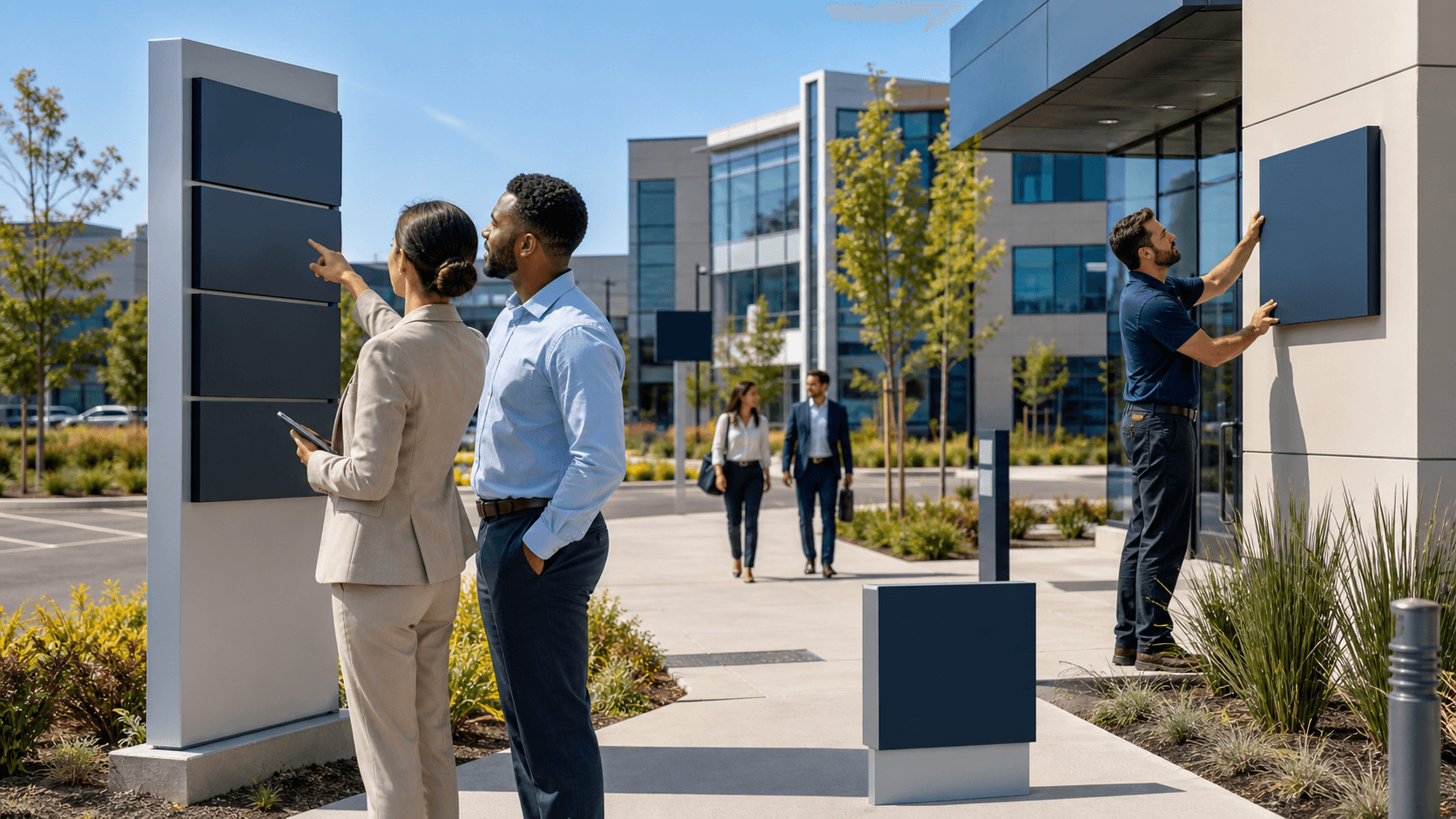
- Directional signs, guiding people from parking to doors, then through halls
- Identification signs, naming rooms, wings, and service areas
- Regulatory and safety signs, meeting ADA and local code rules
- Feature signs, like logo walls or large branded elements that anchor key spaces
We like to map the full visit as a sequence. For example:
- Parking arrival, vehicle entrance, guest parking, and drop-off
- Main entry and reception, clear front door, welcome, and check-in area
- Vertical movement, stairs, and elevators that are easy to find and label
- Key destinations, such as labs, classrooms, showrooms, or conference centers
- Exits and return path, so people can leave without getting turned around
Getting the logistics right is just as important as design. Sign heights, viewing angles, and lighting all matter, especially with fall weather bringing glare, early sunsets, rain, or snow. Durable materials, non-slip floor graphics, and good contrast keep your system working even when the skies are gray and the parking lot is wet.
How Custom Building Signs Elevate Brand Presence
Wayfinding should not feel plain or generic. Your signs are also one of the strongest tools you have for bringing your brand to life in physical space.
Brand presence is what people feel as they walk through your site. It shows up in:
- The way your logo appears on building identification signs
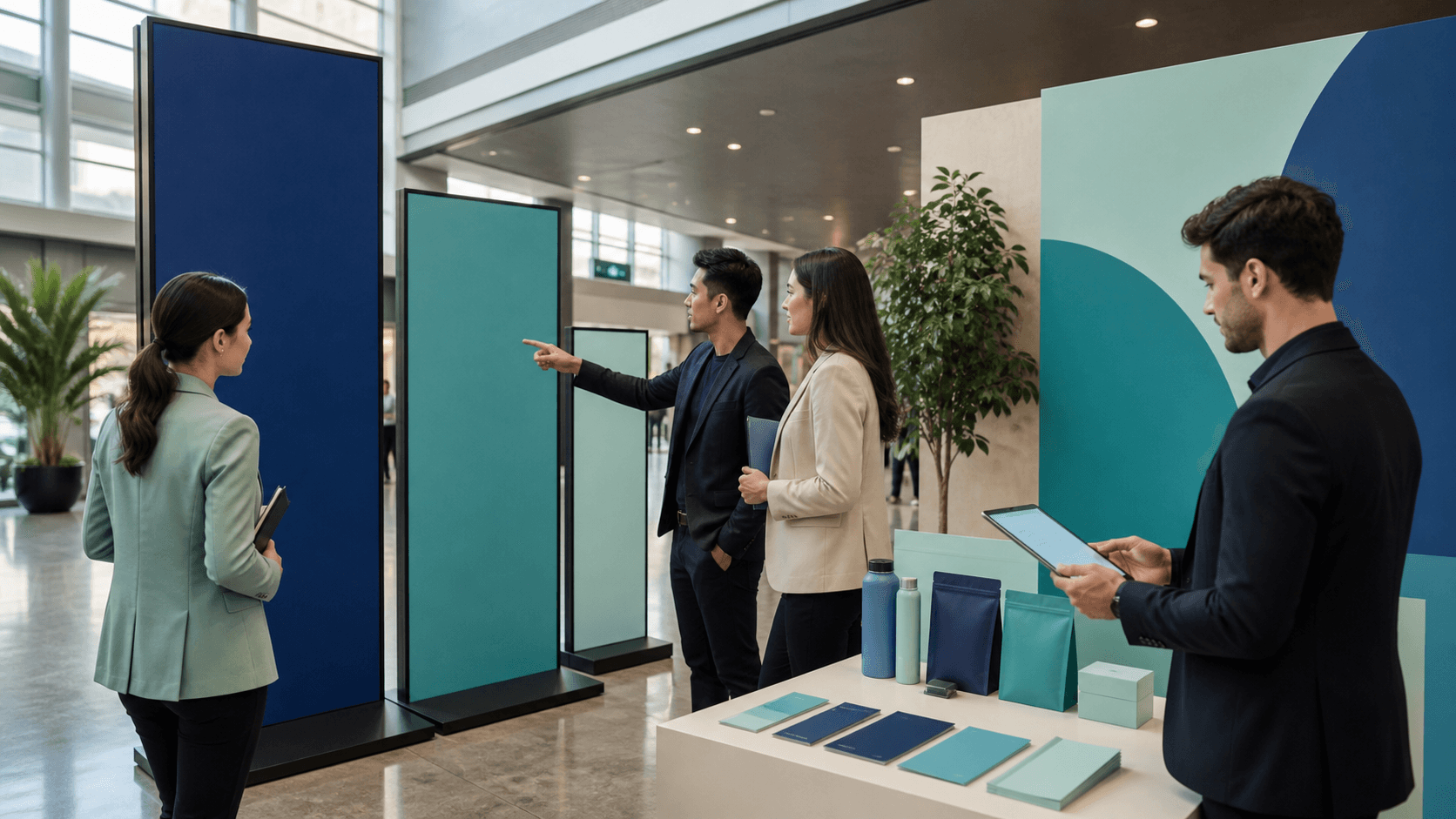
- The colors and fonts that connect to your digital channels
- The materials you choose, like metal, acrylic, or architectural panels
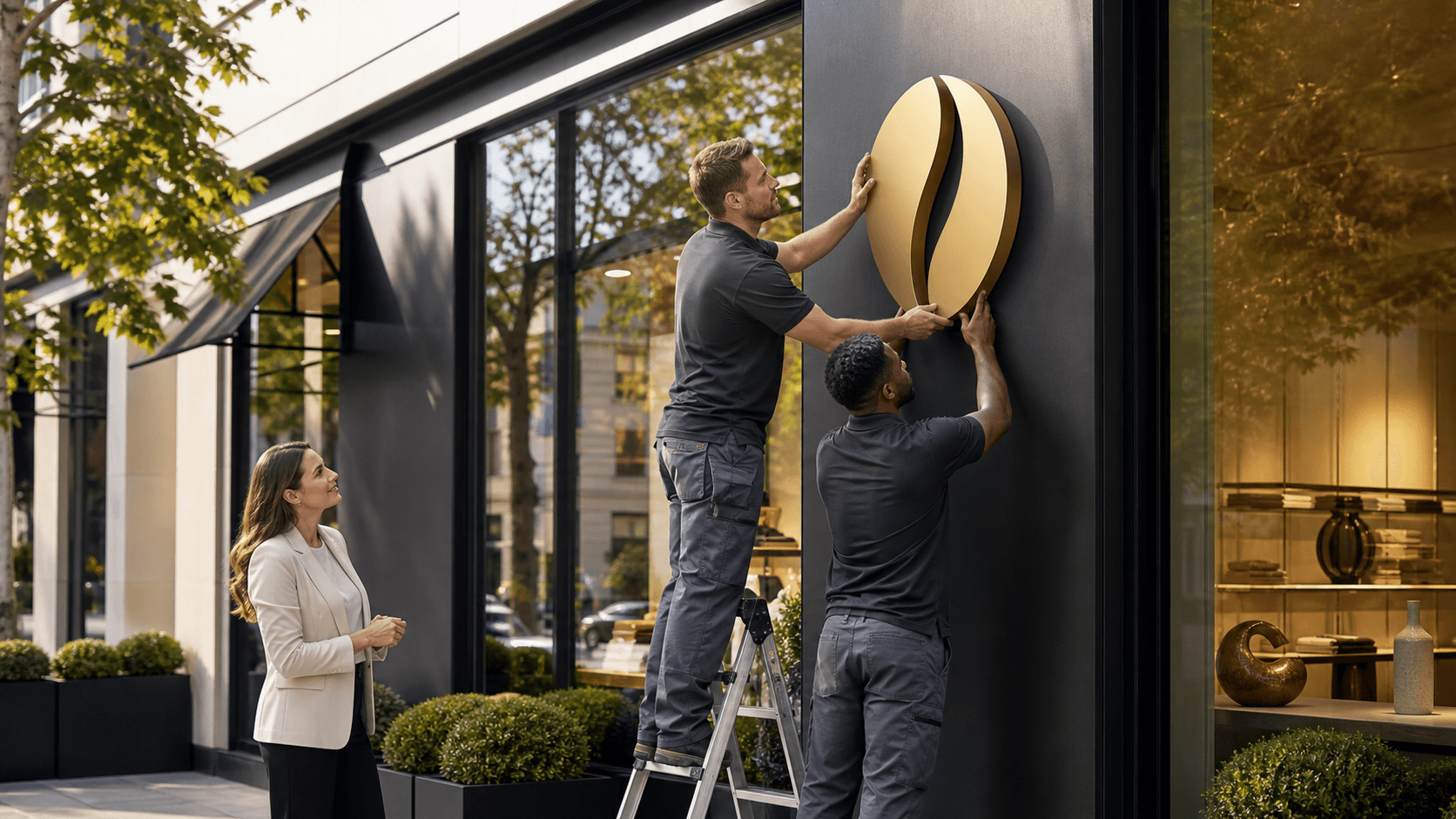
- The details, such as halo-lit channel letters or dimensional logos
When your signage and your brand are aligned, every hallway, lobby, and entrance starts to tell a consistent story. Visitors do not just find the right place, they feel like they are in the right place.
That same feeling gets even stronger when your building signs line up with your fleet graphics and exterior signage. When a branded vehicle pulls into the lot and matches the monument sign, the main ID sign, and the interior wayfinding, you create one connected experience. Familiarity, recall, and trust all grow from that kind of consistency.
Reducing Confusion Across Multi-Site and Fleet Environments
Things get more complex when you have more than one location. Each site has its own layout and local needs, but people should still feel like they are within one family of spaces.
Standards help here. A clear sign family sets rules for:
- Fonts, colors, and logo use
- Arrow styles, icons, and wording choices
- Sign sizes for indoor vs outdoor use
- Placement rules for doors, corners, and intersections
With that framework in place, each location, from a headquarters building to a smaller branch, can adjust for local conditions without losing the shared look.
When fleet graphics match your facility system, you gain a powerful on-the-road presence too. A truck wrap, a monument sign at the entrance, a building ID on the facade, and interior directional signs can all be part of one visual flow that starts on the street and ends at the reception desk.
Scalability and maintenance matter here. Phased rollouts, national installation support, seasonal refreshes, and regular sign checks keep your system fresh, accurate, and safe, even as departments move or services change.
Future-Ready Sign Systems and Collaborative Planning
Sign systems are getting smarter and more flexible. Many organizations are mixing static panels with:
- Digital wayfinding screens in busy lobbies
- QR codes that link to live directories or event schedules
- Changeable inserts for rooms or departments
- Modular systems that can be updated as spaces shift
Accessibility and inclusion are central to this work. Good wayfinding serves everyone. That means using tactile and braille signs where required, high contrast colors, plain language, clear icons, and multilingual support when needed.
The best systems evolve with real feedback. Staff and visitors can point out where people still get lost, which signs they miss, or which messages are unclear. Peak season traffic often reveals patterns you do not see at quieter times. Small updates to placement, wording, or format can make a big difference.
At AGS SEO and American Graphics & Signs, we believe sign planning works best as a partnership between brand, operations, and facilities teams. When we walk a site like a first-time visitor, we can spot confusion points together and design custom building signs that guide people smoothly while strengthening your brand at every turn.
Get Started With Your Project Today
If you are ready to make your storefront stand out, AGS SEO is here to help design and produce impactful custom building signs tailored to your brand. We will walk you through every step, from concept and materials to installation, so your sign works hard for your business. To discuss your project, request a quote, or ask questions, simply contact us and our team will respond promptly.