Turning Fleet Wrap Impressions Into Measurable ROI
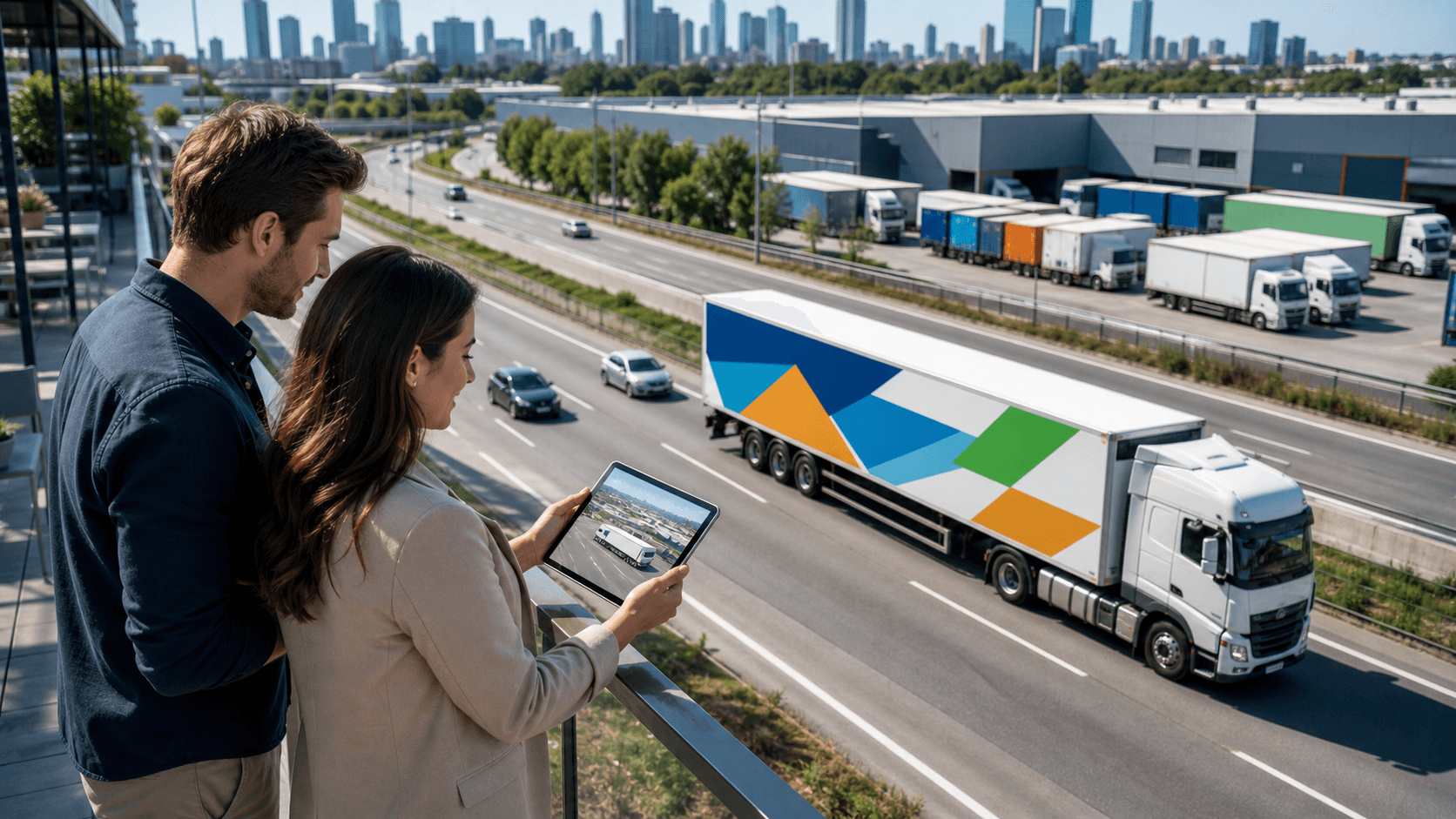
Fleet wraps already work hard for national brands. They move every day, roll through real neighborhoods, and sit in front of real stores, quietly strengthening recognition and visibility with every mile. The challenge is that many teams can only point to "impressions" and a gut feeling when someone asks what the fleet is actually doing for sales and store traffic.
We can do better together. With the right attribution stack, your wrapped vehicles become accountable media, not just moving billboards. You connect real-world exposure to leads, store visits, and revenue, just like you would with digital ads. As fleets ramp up for summer travel and events, this is the perfect time to build a measurement plan that moves with your vehicles and amplifies the brand experience on the road.
At AGS, we work as a strategic partner, not just a print shop. Our team focuses on how design, deployment, and measurement all fit together so enterprise brands can prove and improve the value of their fleet wraps at scale. We combine creative thinking with practical logistics so your graphics elevate brand resonance and generate performance you can measure.
Why Enterprise Fleets Deserve More Than Vanity Metrics
For years, out-of-home media has often leaned on broad estimates. Impressions ranges and anecdotal feedback from the field can be directionally helpful, but they rarely stand up to detailed questions from a CMO or a finance team.
Modern multi-site and enterprise brands are used to digital-level rigor. They want to see:
- Clear tracking paths from exposure to action
- Cohort-level views by region, audience, and offer
- Predictable impact they can plug into planning models
If your fleet is spread across many markets, you need more than a logo and a slogan on the side. Measurement thinking has to start with the first design proof. That means paying attention to where QR codes live, how readable vanity URLs are at real driving speeds, and how obvious the call to action feels at a glance.
A strong enterprise vehicle wrap partner will ask questions like: How will we know this wrap worked? Where should we send people? What needs to be unique by market so we can compare results? Those questions shape stronger art files, stronger data, and ultimately stronger results.
Building the Foundation with QR Codes, Vanity URLs, and Call Tracking
The base layer of your attribution stack is simple, but it has to be planned with care and precision.
QR codes turn your wrap into an interactive touchpoint that deepens brand engagement. When we design for fleets, we often:
- Use unique codes by region, route, or campaign
- Map each code to its own landing path or offer
- Track scans so you can break out performance by segment
Vanity URLs and promo codes add another clean data stream. Short, easy links are easier to remember and type, and they reinforce your brand in the process. They also give you space to test different creative ideas, offers, or CTAs across markets. When traffic comes in through those URLs or codes, it is far easier to tie it back to specific vehicle groups.
Call tracking fills the gap for high-intent leads who prefer to pick up the phone. You can assign different numbers to:
- Local markets or store clusters
- Vehicle types or service lines
- Time-bound campaigns or seasonal pushes
None of this works if people cannot see or use the tracking elements. Design and logistics matter. QR codes need contrast for bright sunlight, size for longer viewing distances, and placement that works at speed and at a stop. Vanity URLs should be bold, clean, and aligned with your brand. Our installers follow detailed guides so those elements land in the same place on every vehicle, not wrapped around a curve or hidden behind a handle.
Taking Attribution Further with Geofenced Lift Studies
Once your basic tracking is in place, you can layer on geofenced lift studies to understand local impact and how your on-the-road presence influences brand behavior. A geofenced lift study uses mobile location data and digital platforms to compare behavior in areas your fleet visits heavily to similar areas with little or no exposure.
A practical setup usually looks like this:
- Pick priority markets where you expect strong fleet activity
- Define test and control zones with similar profiles
- Align routing schedules so vehicles hit test zones often
- Compare awareness, site visits, or store traffic over a set window
This is where collaboration becomes key. A partner like AGS can work with your media and analytics teams to sync install timing, route plans, and measurement calendars. Together, we coordinate design, routes, and schedules so your wraps show up where they can make the most difference. If vehicles will be at big summer events, tourist corridors, or near seasonal retail hotspots, we help you design routes and timelines that make the lift easier to see, measure, and optimize.
Regional weather and daylight patterns matter too. For example, in long, bright summer evenings, certain sides of the vehicle may get more attention. Small choices about orientation, color, and finish can boost the odds that someone in a busy parking lot actually engages with your CTA and remembers your brand.
Integrating Fleet Wraps Into Your MMM and Media Stack
For many enterprise brands, Marketing Mix Modeling is where budget decisions get made. If your fleet media does not exist as a clean input, it can get under-valued or overlooked at the strategy table.
To plug wraps into MMM, you need structured data, such as:
- Deployment and removal dates by vehicle and market
- Fleet size and approximate mileage or route patterns
- Impressions modeling tied to traffic and exposure windows
- QR scans, vanity URL visits, promo redemptions, and call logs
- Results from any geofenced lift studies or local experiments
An aligned enterprise vehicle wrap partner helps by standardizing how these details are captured and delivered. We think about data when we plan your rollouts, so your analytics team gets consistent feeds they can trust.
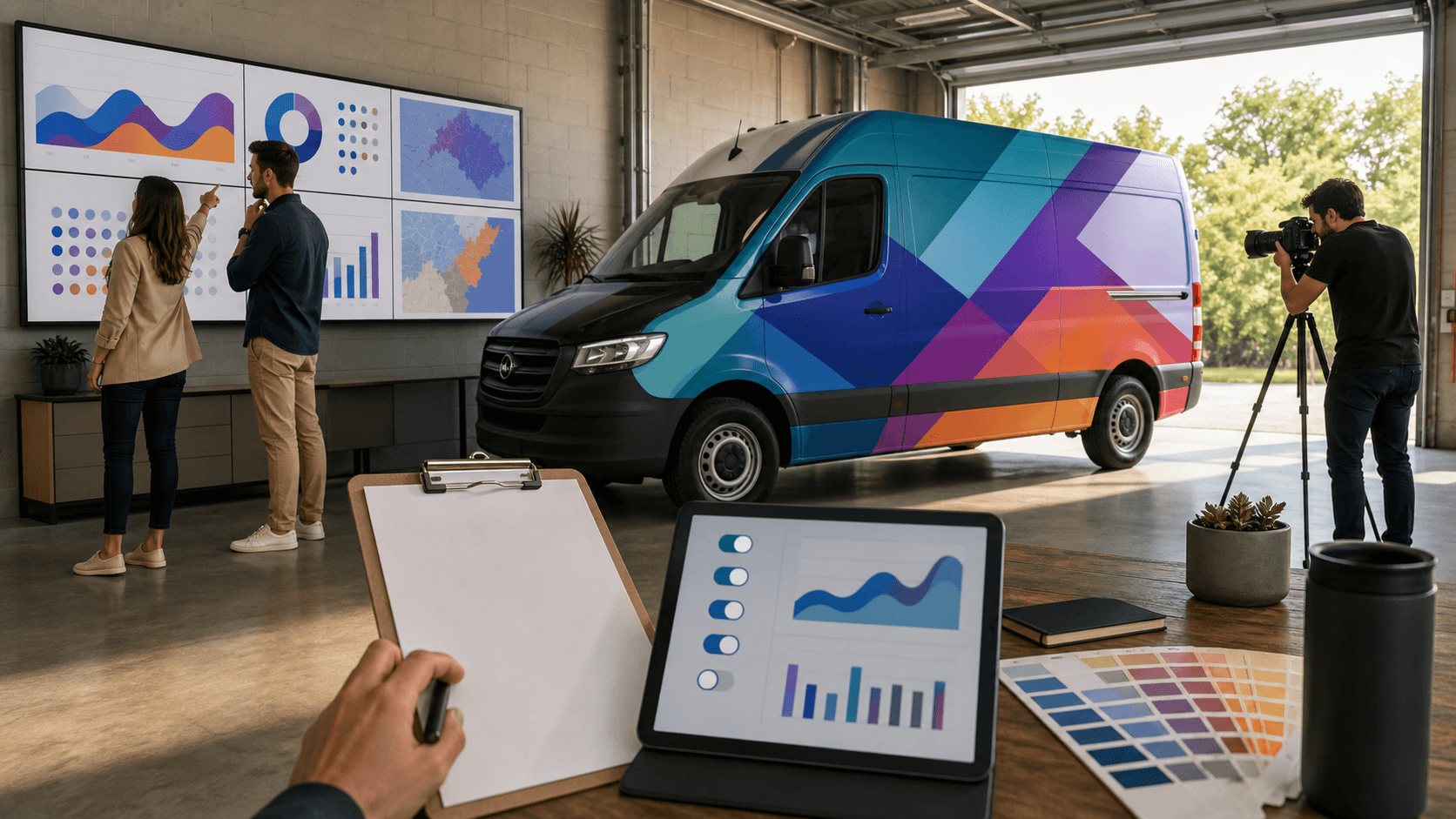
When brand, operations, finance, and analytics teams sit together with that data, the conversation shifts. You can test different spend levels by market, adjust creative for certain regions, and see how wraps interact with TV, paid search, or in-store promotions over time. Your fleet graphics become a visible, quantifiable part of a modern media stack.
Designing Wraps for Attribution From Day One
Attribution should not be slapped on at the end. It needs to live in the design files. That starts with clear visual hierarchy: one main message, one main action, and tracking tools that are obvious and easy to use.
Some practical creative choices we lean on:
- Strong color blocks behind QR codes so they pop against the body color
- Short, bold vanity URLs that pass the "three-second read" test
- Simple copy like "Scan for Local Deal" or "Book Service Now"
On the production side, national rollouts depend on consistency. Print specs, materials, and instructions for installers all need to support long-term legibility and brand quality. If a QR code fades, cracks at a seam, or gets tucked into a curved area, your data suffers and the brand experience weakens. Our job is to line up creative, production, and field teams so tracking assets stay readable through weather, washes, and long highway runs.
With an attribution-ready design system in place, we can keep iterating together. Seasonal campaigns, event-specific wraps, and new offers can all plug into the same tracking backbone. That means every new design is not a fresh guessing game; it is another test in a growing, reliable data set that steadily improves both performance and brand resonance.
Turning Moving Billboards Into Proven Performance Media
When you bring all these layers together, your fleet shifts from impression-only media to a proven performance channel that also elevates how your brand shows up in the real world. QR codes and vanity URLs show direct response. Call tracking points to high-intent leads. Geofenced lift studies reveal local impact. MMM pulls it all into the bigger picture for your executive team.
At AGS, we treat enterprise fleets as serious media assets that deserve serious measurement and standout design. Together, we can align design, data, and deployment so your vehicles look exceptional on the road, reinforce your brand everywhere they go, and stand up to the toughest performance questions inside the boardroom.
Get Started With Your Project Today
As your trusted enterprise vehicle wrap vendor, AGS SEO is ready to help you turn every vehicle in your fleet into a high-impact branding asset. We work closely with you to understand your goals, refine your message, and deliver consistent, professional graphics that align with your brand. If you are ready to move forward or have questions about your options, simply contact us and we will guide you through the next steps.