Turn High-Mileage Vehicles Into Brand-Building Workhorses
High-mileage fleets live on the road. Long days, tight routes, heavy traffic, hot summer sun, sudden storms, and no time to slow down. Every vehicle has a job to do, and every hour it sits still in a bay is an hour it is not serving customers.
That is exactly why smart fleet leaders look at commercial vehicle wraps as more than just decoration. When wraps are planned well, every mile turns into brand visibility, wayfinding help, and quiet proof that your team is organized and dependable before anyone even steps out of the cab. Your trucks, vans, and trailers become moving signs that work all day and all season.
We also know the worries that come with that idea. Will the wrap handle harsh weather and constant washing? How much downtime will installs create? Can the look stay consistent across regions and vehicle types? Is it worth the investment compared to other kinds of advertising? In this post, we will walk through how to choose wraps that stand up to miles, climates, and multi-site logistics, while building a strong, steady brand presence across your whole network.
What High-Mileage Fleets Need From Wrap Design
High-mileage fleets do not have the luxury of fussy graphics. Your vehicles move fast, traffic is busy, and most people only get a few seconds to see you. That means wrap design has to balance creativity with very clear, simple communication.
Good design for working fleets usually focuses on:
- Bold, simple visuals that read quickly
- High-contrast color pairings for strong visibility
- Clean, easy-to-read typography, not fancy fonts
- Smart logo placement near eye level and on key panels
We want someone sitting in traffic, standing on a sidewalk, or looking out a store window to understand who you are and what you do in an instant. That often means more white space (or open space) than you might expect. Less clutter makes your logo, web address, and core message pop.
Seasonal and regional conditions also matter. In bright summer sun, light colors can wash out and small type can vanish in glare. In winter, low light can hide dark graphics on dark vehicles. To keep wraps readable all year, we look at:
- Color values with enough contrast in both sun and shade
- Reflectivity and brightness that help with dawn and dusk visibility
- Placement that avoids harsh glare lines on curved panels
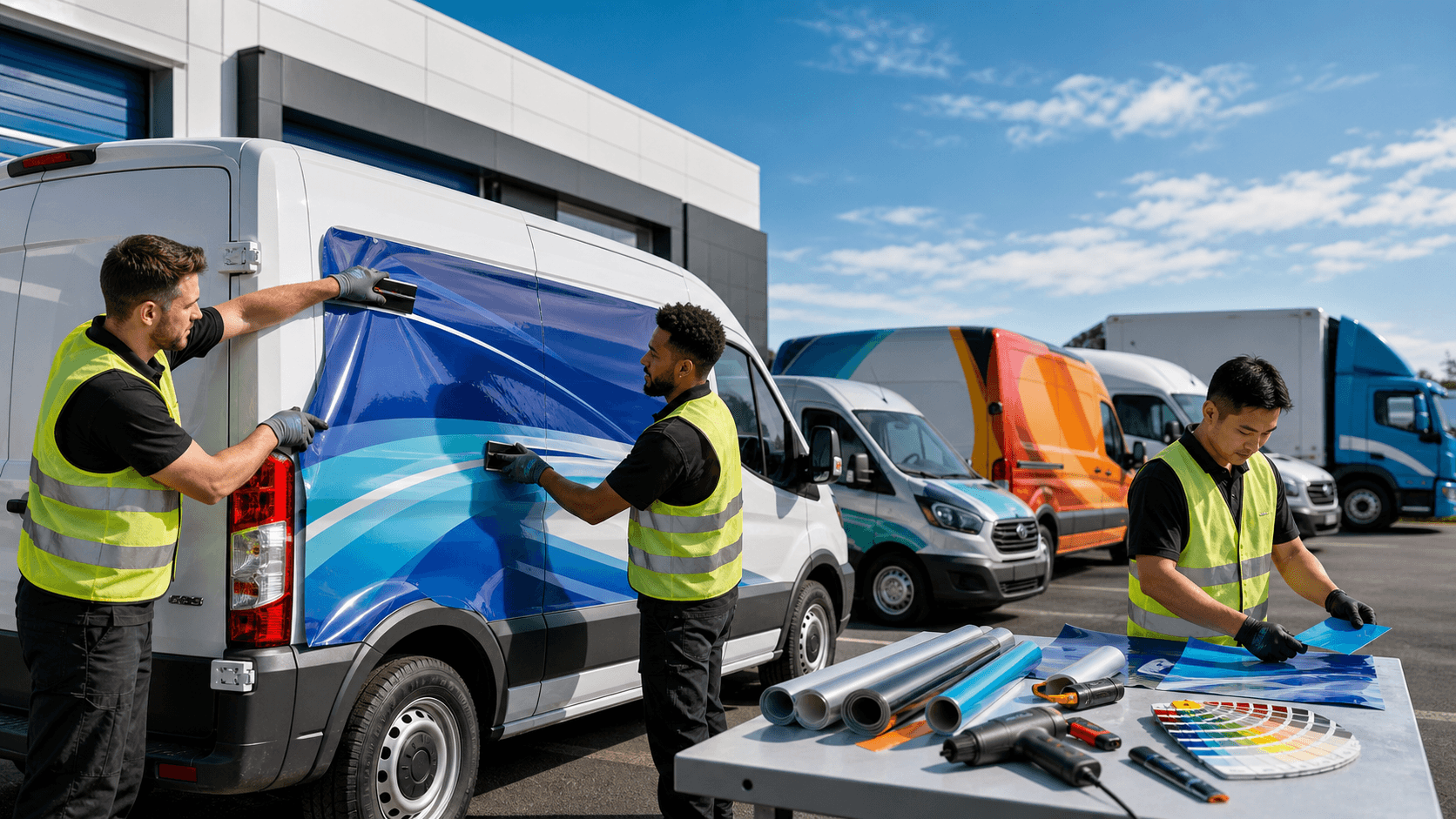
High-mileage fleets also tend to run mixed vehicles. You might have vans, pickups, box trucks, and trailers all in one market. A strong wrap system plans for that. The logo, colors, and core layout stay consistent, while the design scales and shifts to fit each body style, so your brand looks connected whether someone sees a single van or an entire yard of equipment.
As more brands invest in out-of-home visibility to complement digital campaigns, these clear, consistent design systems help your fleet graphics reinforce every other touchpoint and keep your message working hard in the real world.
Choosing Materials That Go the Distance
On a busy fleet, materials are not a small detail. They are what stands between your brand and daily punishment from sun, rain, road film, and brushes at the wash bay. High-mileage commercial-vehicle wraps benefit from premium vinyl and laminates that are built for UV exposure, temperature swings, and physical wear.
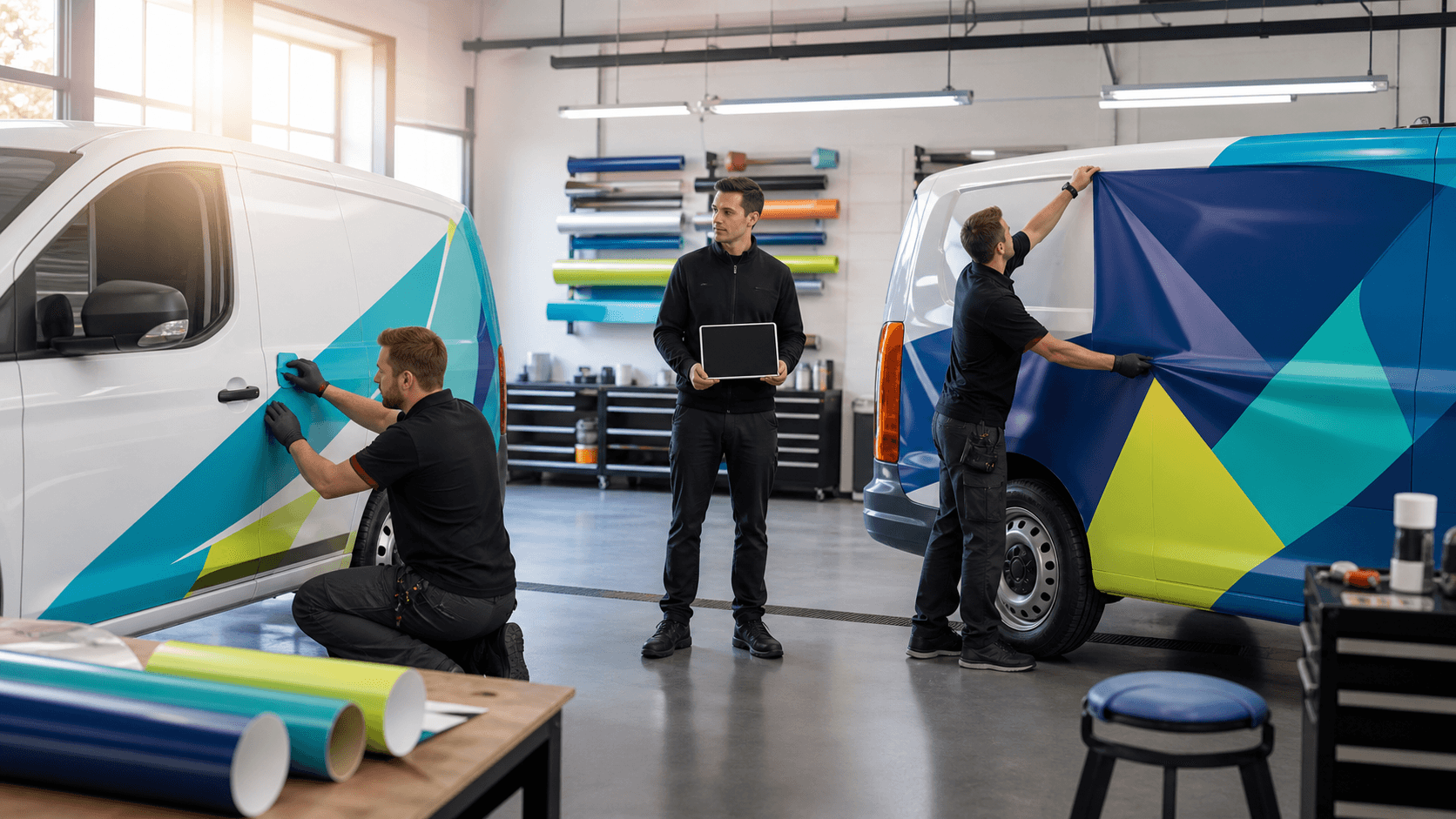
Two main vinyl types often come up: cast and calendared. In simple terms:
- Cast vinyl is formed in a way that lets it stay more stable and flexible over time
- Calendared vinyl is rolled and can be better for flat or short-term work
For high-mileage vehicles with curves, rivets, and long service life, cast vinyl is usually the stronger long-term play. On top of the vinyl sits an overlaminate. That clear layer locks in color, protects against scuffs, and shapes the final look.
Common laminate finishes include:
- Gloss, for a shiny, high-energy brand feel
- Matte, for a softer, low-glare look
- Satin, which sits in the middle and can balance glare and style
Regional and seasonal weather should guide material specs. Hot summers bring heavy UV and high panel temps. Cold winters bring road salt, ice, and quick freeze-thaw cycles. Some fleets also battle hail or high humidity that can stress edges and seams. Material warranties and product data should make sense for the climate your vehicles actually live in, not just where they are purchased.
Choosing quality up front usually pays off in:
- Fewer reprints and repairs
- Less time pulled from routes for fixes
- More consistent color in photos, social media, and customer visits
That consistency builds trust. People start to recognize your fleet, and every vehicle looks like it belongs. Over time, your graphics become part of how customers navigate their day and remember your brand.
Installation Quality and Logistics for Busy Fleets
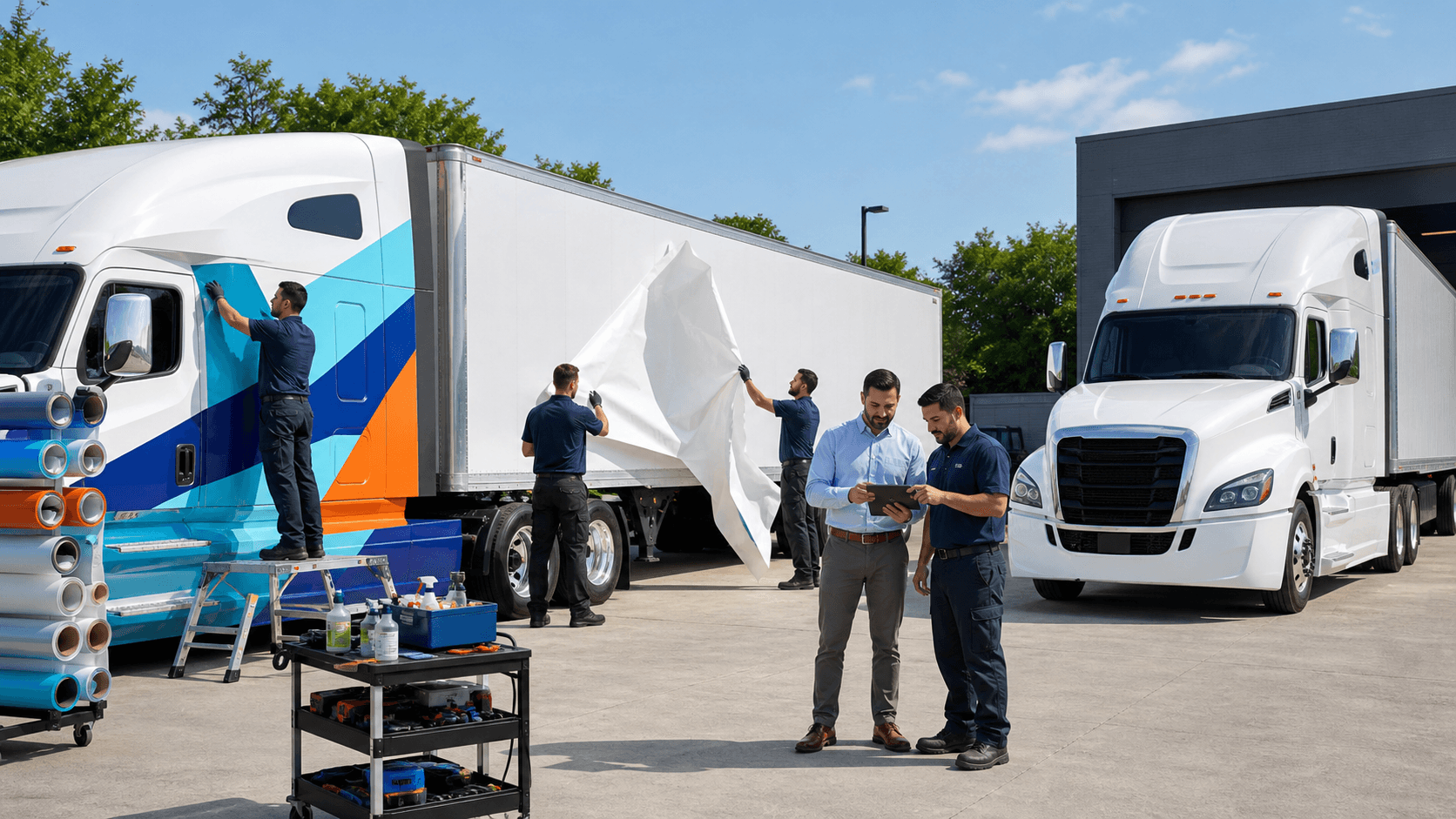
Even the best vinyl will struggle if the installation is rushed or uneven. High-mileage fleets put constant pressure on seams, edges, and curves. Proper surface prep, panel layout, and finishing work is what keeps wraps from lifting, bubbling, or failing early along door edges and high-touch areas.
For working fleets, installation is also a logistics puzzle. Vehicles cannot sit for days; routes still need to run. Helpful scheduling strategies include:
- After-hours or weekend installations when possible
- Staggered appointments so only a few units are down at once
- Regional planning to coordinate installs during peak seasons
A nationwide installer-network becomes especially helpful for multi-location fleets. When the same standards and methods are used in each market, you get:
- Consistent quality across all regions
- Centralized planning and clear timelines
- Less guesswork every time a new site or vehicle type comes online
Documentation and quality control should be part of the plan too. That often includes:
- Photos of finished installs for brand records
- Simple inspection checklists for drivers and managers
- Standardized processes to keep branding aligned over time
Those habits make it easier to track how wraps hold up to mileage and where you might want to adjust designs or materials next time. As your fleet data grows, these insights help us refine both visuals and installation methods so reliability keeps improving.
Scaling Commercial Vehicle Wraps Across Your Network
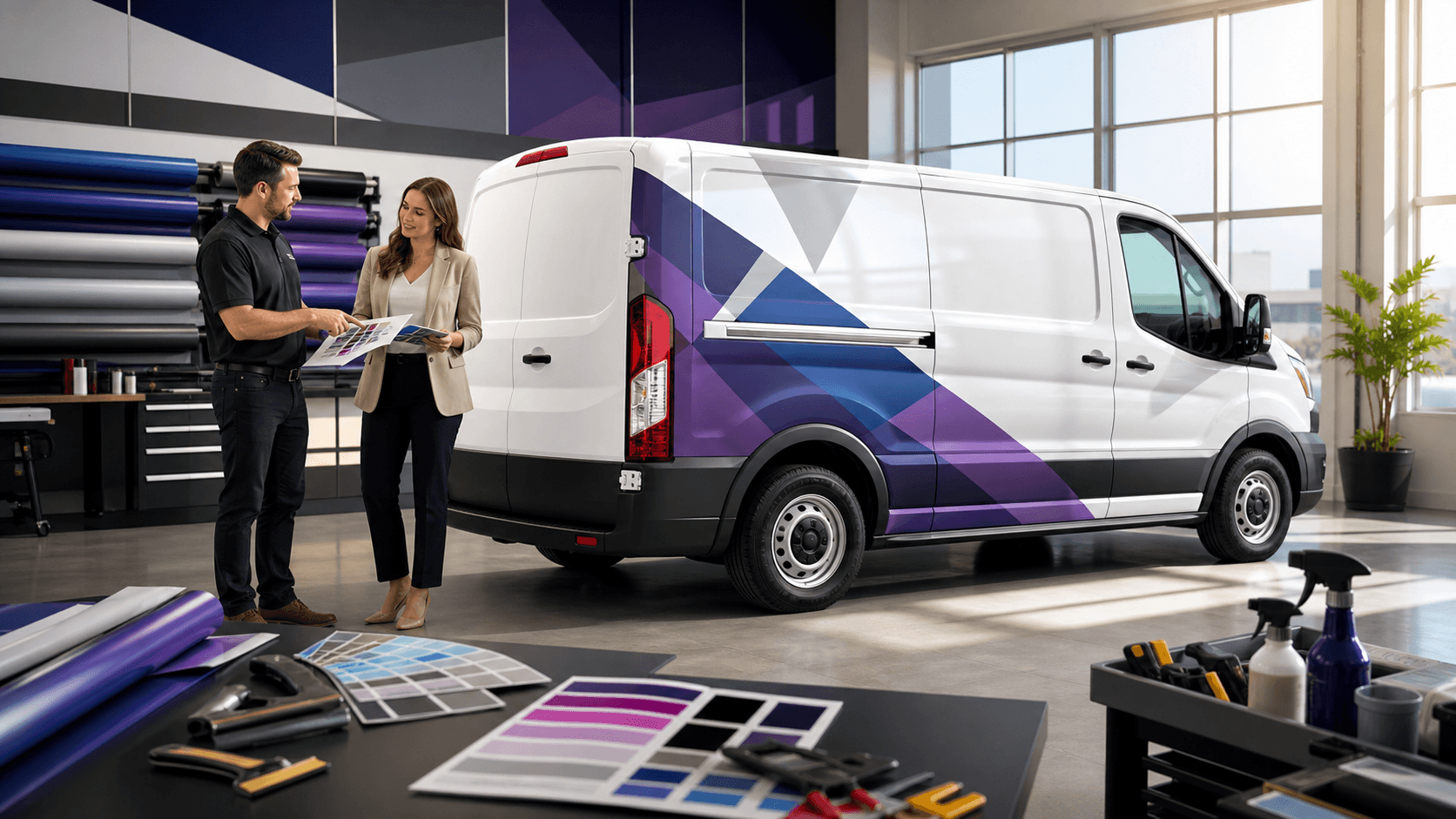
When fleets grow, commercial vehicle wraps work best when they follow shared standards, not one-off designs. You can still give local teams room for regional phone numbers, custom URLs, or key services, but the core look stays the same.
A central brand library helps keep everyone aligned. Strong libraries usually include:
- Approved art files and logo versions
- Color profiles tuned for print, not just screens
- Material specs that match your performance needs
- Clear guides for placement on each common vehicle type
With those pieces in place, new vehicles can be brought into the system quickly, without creative guesswork at each site. It also becomes easier to use real-world data. By tracking performance and wear patterns, fleets can spot which panels age fastest, which colors fade sooner, and which layouts are easiest to read at a distance.
Then design and material choices can be refined with each round. Operations, brand teams, and the graphics partner all play a part. When those groups work together, every new vehicle launch or seasonal surge feels smoother. Orders move faster, installs are more predictable, and your fleet looks unified wherever it rolls.
Plan Your Next High-Impact Fleet Wrap Rollout
As summer heat and busy routes ramp up, it is a good time to take a fresh look at your fleet graphics. Walk your lot, look at vehicles in bright daylight, and check how they appear in low light or at twilight. Ask simple questions: Is the message easy to read? Are edges holding? Does the brand look consistent from unit to unit and site to site?
A basic planning framework can help guide your next rollout:
- Clarify what you want your fleet to do: awareness, wayfinding, recruiting, or promotions
- Audit existing wraps for visibility, condition, and consistency
- Define design and material standards that match your mileage and climate
- Align timelines with peak service seasons so installs do not surprise your routes
At American Graphics & Signs, we focus on fleet graphics and commercial signage that bring together brand creativity and real-world logistics. We are grateful to work alongside teams across the country to plan strategy, design, printing, and installation so that vehicles and facilities turn into consistent, hard-working brand assets.
We see every project as a collaboration. Together, we can choose materials, refine designs, and coordinate installs in ways that keep your operation moving while your brand presence grows stronger. With the right materials, smart design, and a trusted installer network, every mile your fleet drives can move your brand forward and keep working for all of us, day after day.
Get Started With Your Project Today
Transform your fleet into a powerful branding tool with our custom-designed commercial vehicle wraps. At AGS SEO, we work closely with you to create graphics that reflect your brand and stand out on the road. Whether you need a single vehicle or an entire fleet wrapped, our team can guide you through design, production, and installation. Have questions or ready to move forward with your project today? Simply contact us and we will help you get started.