Turning Fleet Graphics Into a Scalable Brand Engine
Fleet vehicles are rolling media. When the graphics are planned well, every mile can support our brand story, our routes, and our sales teams. When they are not planned, they turn into one-off headaches, slow approvals, and uneven results from truck to truck.
As fall planning kicks in and Q4 campaigns line up, custom fleet decals become a real lever. This is the season when new routes open, seasonal services ramp up, and next year's roadmap starts to feel real. Getting our fleet branding workflow in shape now sets us up for smoother launches and stronger visibility when the new year hits.
At American Graphics & Signs, we see the best results when fleet graphics are treated as a repeatable system, not random projects. Together, the goal is simple: one connected process that takes us from brand idea to finished install, anywhere in the country, with speed, control, and confidence. That is what this article walks through, step by step.
Defining a Fleet Branding Playbook That Actually Scales
A scalable fleet brand starts with a clear playbook. Instead of "one and done" designs, we build a process we can repeat every time a new vehicle hits the yard.
A basic lifecycle might look like this:
- Intake and brand discovery
- Design standards and templates
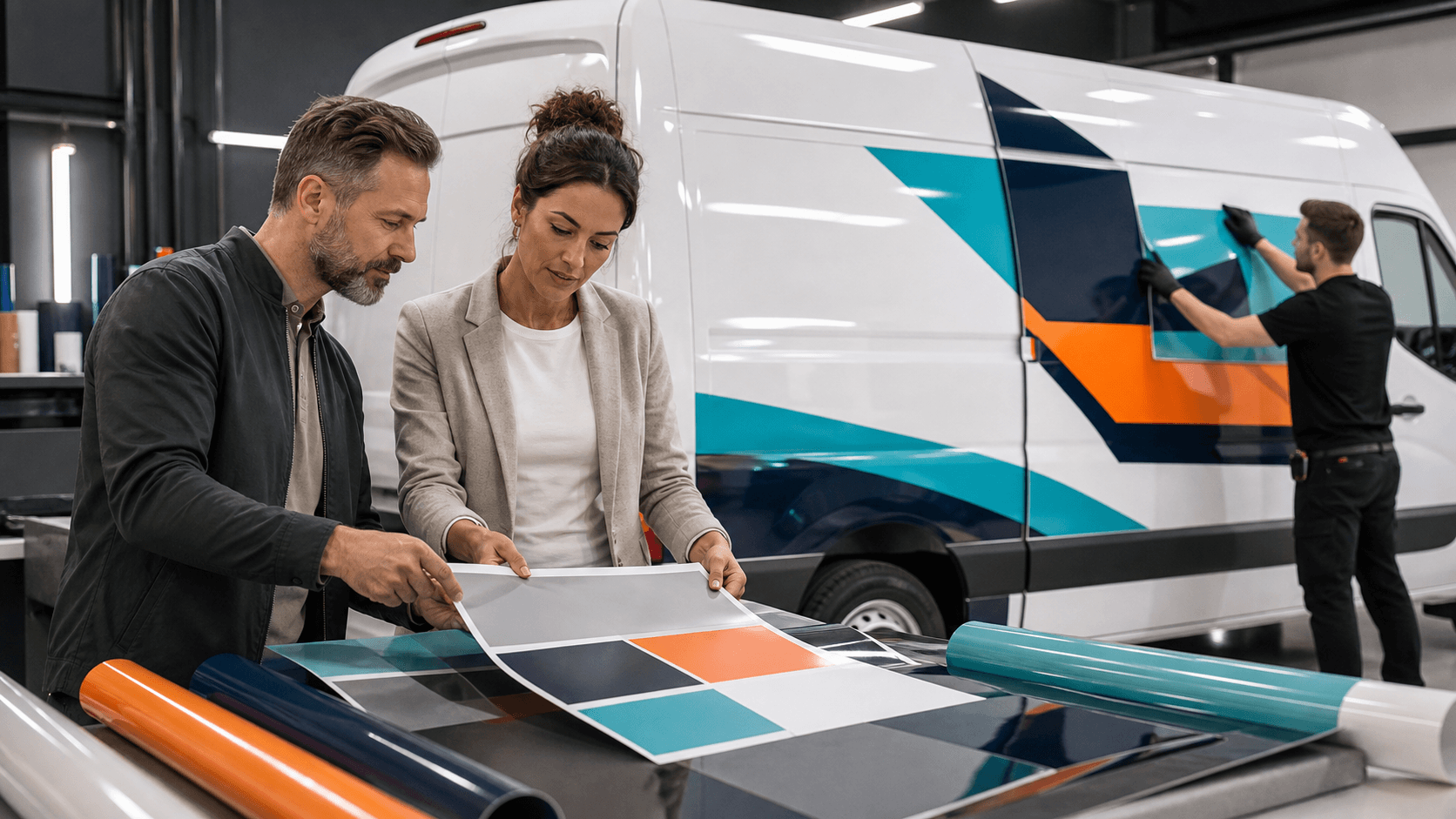
- Prototyping and visual mockups
- Approvals and revision paths
- Production and kitting
- Installation and quality checks
- Maintenance and refresh cycles
When each step is defined, it is easier to plug in new units, new markets, or new service lines without starting from zero. We are not guessing where the logo goes on a new trailer; we are just applying the rules we already wrote together.
A strong brand kit keeps everything on track and elevates how our brand shows up on the road. That kit should include:
- Logo files and approved lockups
- Color profiles and print notes
- Placement rules by vehicle type
- Photo style and icon usage
- Message hierarchy and tagline rules
Now add people. Marketing, fleet managers, operations, and our graphics partner all share this same playbook. Everyone knows lead times, who approves what, and how launch dates tie into routes or store openings. When we layer in clear service-level expectations and agreed communication channels, we stop fighting fires and start running a calm, repeatable system that consistently reflects the strength of our brand.
Using Custom Fleet Decals to Standardize Brand Visibility
Custom fleet decals are the bridge between brand standards and real-world vehicles. The goal is consistent, recognizable branding that builds resonance and trust no matter what we are running on the road.
We can standardize the core brand and still stay flexible:
- Core layout stays the same across vans, box trucks, and tractors
- Local details like phone numbers or service lines shift by market
- Safety markings and regulatory elements fold into the design
Technical design is where a lot of the real work happens. Scaled templates, panel breaks, door seams, and contours all affect how the message reads at highway speeds. Material choice matters too, especially with sun, rain, snow, and road grime changing from region to region. The right film, laminate, and adhesive help decals stay sharp and secure through daily wear so our brand always looks composed and professional.
Color management is another key piece in preserving brand integrity. To keep brand colors steady across different print runs and locations, our workflow should include:
- Pantone or custom color matching
- Material specific color profiles
- Printed proofs checked against our standard
Once the graphics are locked, standardized decal kits and install guides make it easier for each location or installer to get the same clean, professional result. We are not relying on guesswork in a parking lot; we are following a proven set of instructions that protects the consistency and impact of our brand.
Streamlining Approvals and Production for Faster Rollouts
The approval phase can either be quick and painless, or the place where projects stall. A lean, well-structured system keeps things moving without losing creative or brand control.
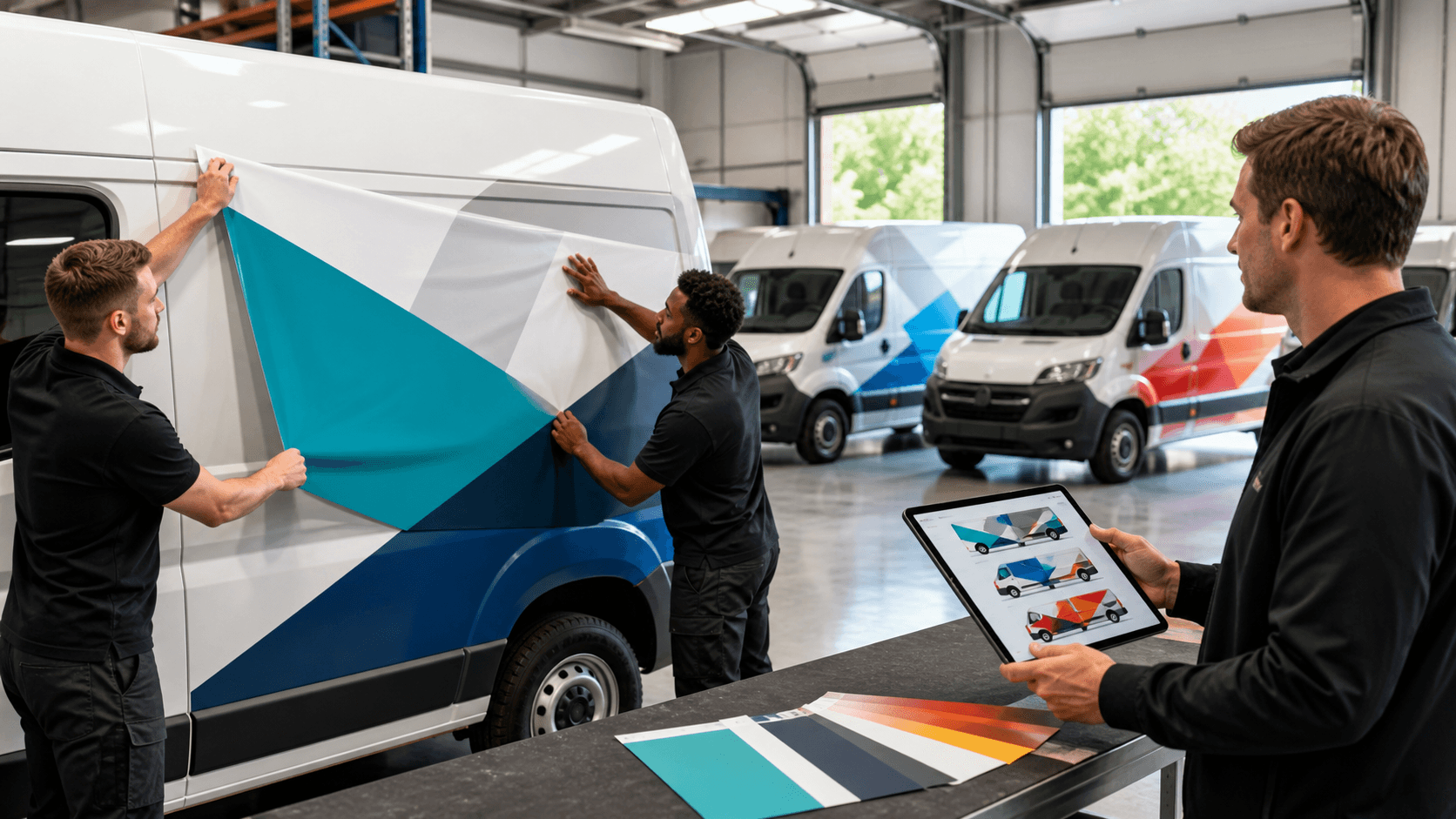
Digital mockups help here. When everyone reviews the same placement maps and visual proofs, it is easier to approve layouts in fewer rounds. Pre-approved "families" of designs, like versions for small vans, large vans, and trailers, cut down on back-and-forth for each new unit while keeping our visual identity aligned.
Forecasting also plays a big role. If we know when leases end, when new trucks arrive, or when new territories open, our graphics partner can:
- Pre-quote the work so budgets are ready
- Stage materials in advance
- Reserve production capacity for key dates
When printing, kitting, and shipping live with one integrated team, there are fewer surprises between sign-off and install. For many fleets, fall is a smart time to use natural slow periods to update graphics, refresh older units, or add short-term holiday visuals so the fleet is ready when peak demand hits, and our brand is front and center when it matters most.
Coordinating Nationwide Installs with Precision and Care
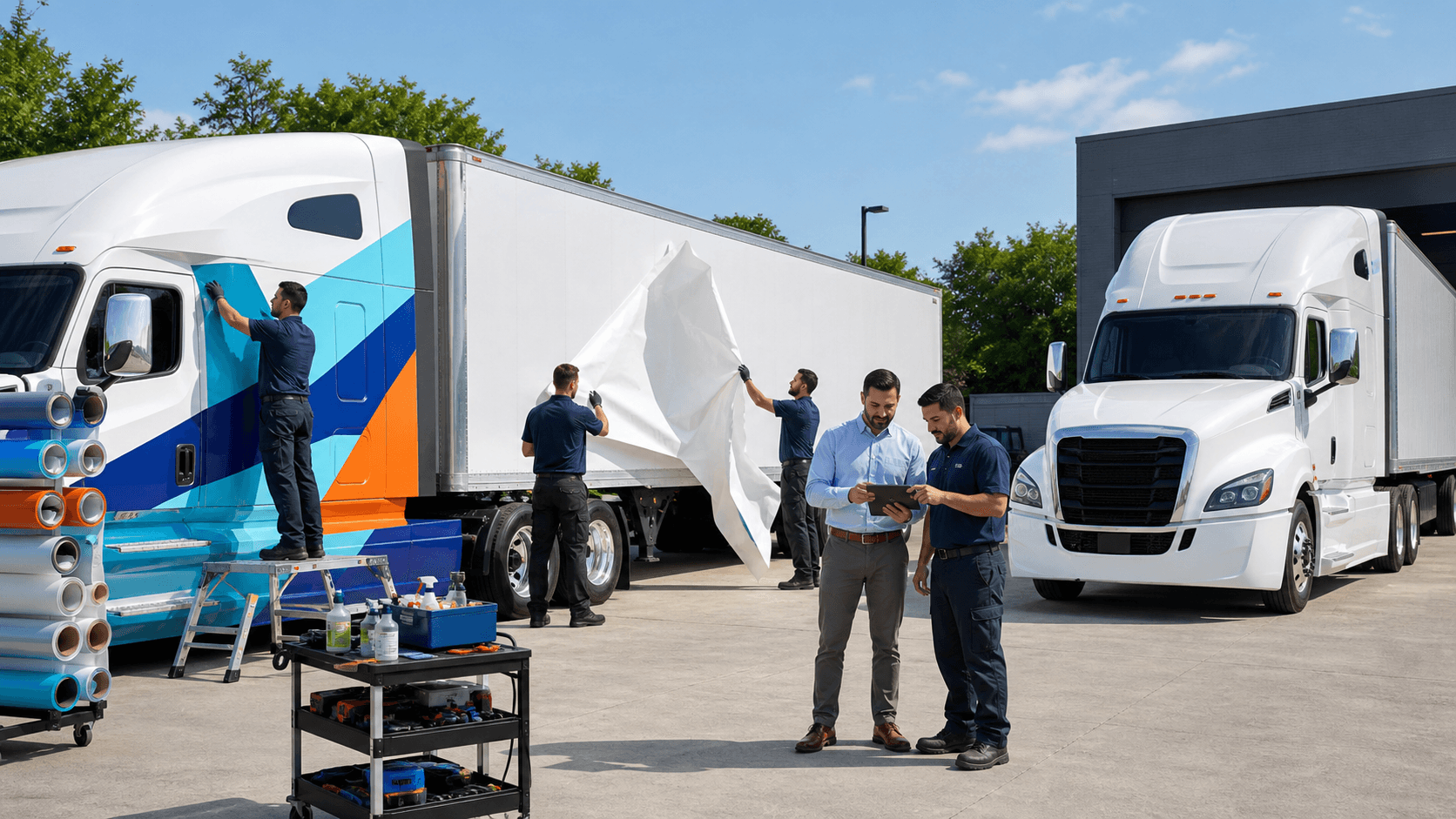
Once the decals are printed, installs become the next big test. For fleets that run across regions, a vetted installer network is a major advantage. We want people who understand vehicle graphics, prep surfaces correctly, and work within local weather and site conditions.
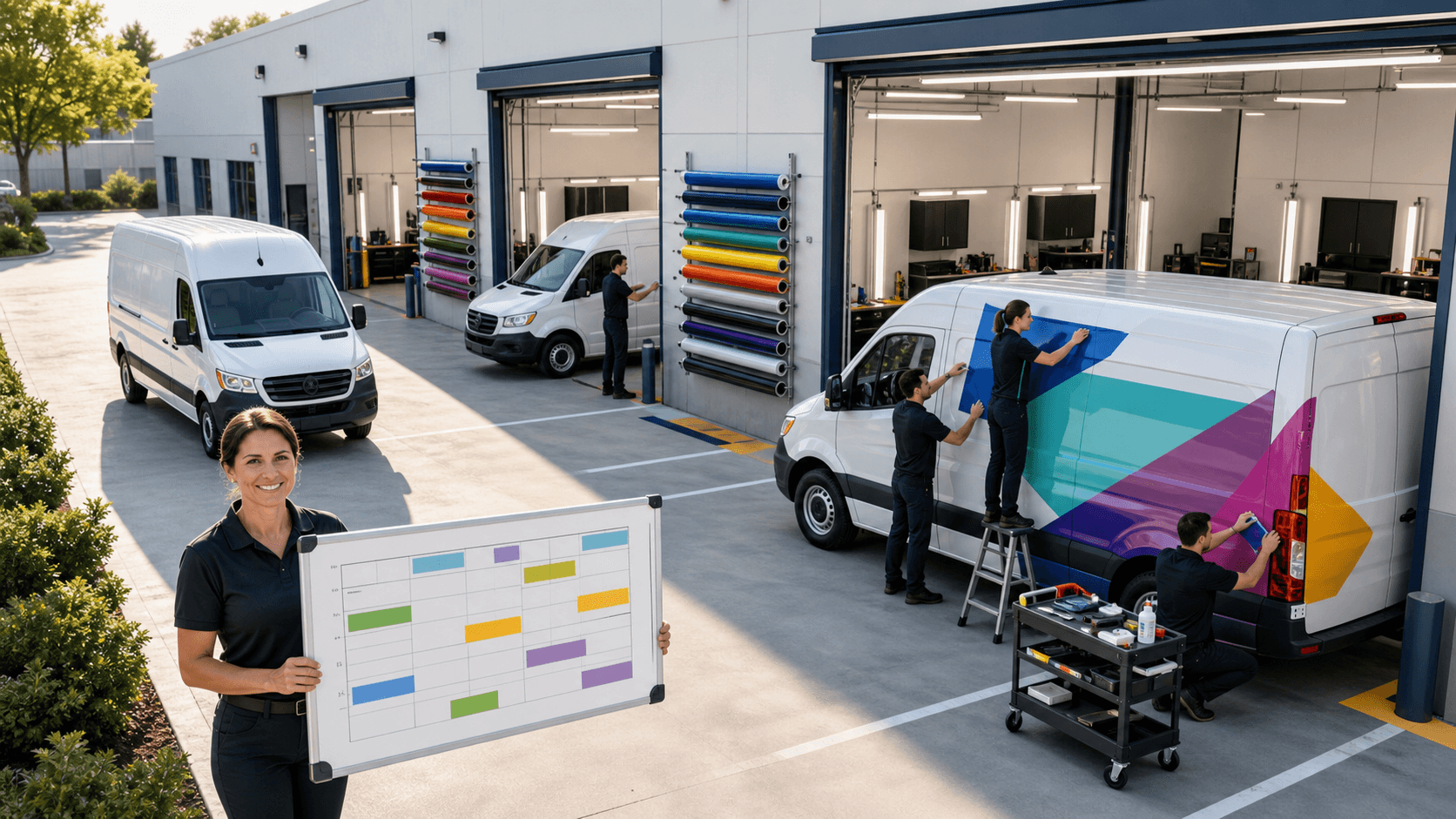
Scheduling installs around how our fleet runs keeps business moving. Good planning looks at:
- Vehicle downtime and off-hours
- Existing maintenance or repair windows
- Route patterns and yard schedules
On-site quality checks close the loop. A standard inspection list, photo documentation, and clear sign-off steps confirm that edges are sealed, panels align, and bubbles or wrinkles are addressed before the vehicle rolls out and represents our brand on the road.
All of this is easier with centralized project management. One main point of contact, shared tracking tools, and steady status updates keep multi-location rollouts visible and predictable. From our base serving customers nationwide, we see how much stress this removes for fleet and marketing teams and how much more confident they feel in their brand presence.
Measuring Impact and Refining Our Fleet Branding Workflow
Once our workflow is up and running, the next step is learning from it. Fleet branding is not just about looking good in the lot; it is about what happens out on the road and how effectively we reach the communities we serve.
Some helpful metrics to track include:
- Impressions by route or market
- Brand recall or awareness lift in key areas
- Leads tied to URLs, QR codes, or promo codes on vehicles
- Activity when new routes or territories launch
Feedback from drivers, sales teams, and customers is just as useful. Together, marketing and fleet managers can adjust designs based on:
- Visibility in rain, fog, or low light
- Readability at city and highway speeds
- How materials hold up through different seasons
A simple audit plan keeps our fleet fresh. Regular checks for fading, peeling, or dated messaging make it easier to schedule refresh cycles into normal operations, not as last-minute projects. Custom fleet decals are flexible, so it is easy to update messages about new services, sustainability efforts, or refined positioning as our brand grows and our story evolves.
Building a Future-Ready Fleet Brand, Together
Treating fleet branding as a living system turns our vehicles into a steady, reliable part of our marketing mix. As we move into new markets, add routes, or respond to changing customer expectations, our custom fleet decals can shift with us instead of holding us back.
With a clear workflow, strong design standards, and a national design, production, and installer network working in sync, every new vehicle becomes easier to brand than the last. At American Graphics & Signs, we partner with teams to build that kind of repeatable, future-ready process so every mile on the road feels like a confident, comforting extension of their brand, and a powerful, visible signal of the quality and care they deliver every day.
Get Started With Your Project Today
Transform your vehicles into powerful brand assets with our expert design and installation of custom fleet decals. At AGS SEO, we collaborate with you to create graphics that match your branding, fit your fleet, and stand up to everyday wear. Whether you are updating a few vehicles or an entire fleet, we are ready to guide you from concept to completion. Have questions or need a quote fast? Just contact us and our team will respond promptly.