Turn City Gridlock Into a Moving Brand Stage
City traffic is not going away. Lanes crawl, horns flare, and everywhere you look there is something competing for attention. For fleet operators, that reality can feel challenging. Yet those same slowdowns are also long, built-in moments where people sit and focus on the vehicles right in front of them.
That is where strong fleet truck wraps shine. In low-speed city conditions, your trucks become bold, rolling billboards. When design is done right, each stoplight, lane change, and delivery stop becomes a precise opportunity for your brand message to land, resonate, and stay with your audience.
At American Graphics & Signs (AGS), we partner with enterprise fleets and multi-site brands to turn trucks, trailers, and vans into consistent, high-impact brand assets. Together, we transform everyday routes into coordinated, moving stages for your story. Late spring and early summer are especially powerful months in cities, with construction zones, event traffic, tourists, and extra deliveries all stacking up. Below, we share how we can design wraps that perform in that busy, crowded world while keeping safety, quality, and precision at the center.
Reading the Urban Landscape Before We Design
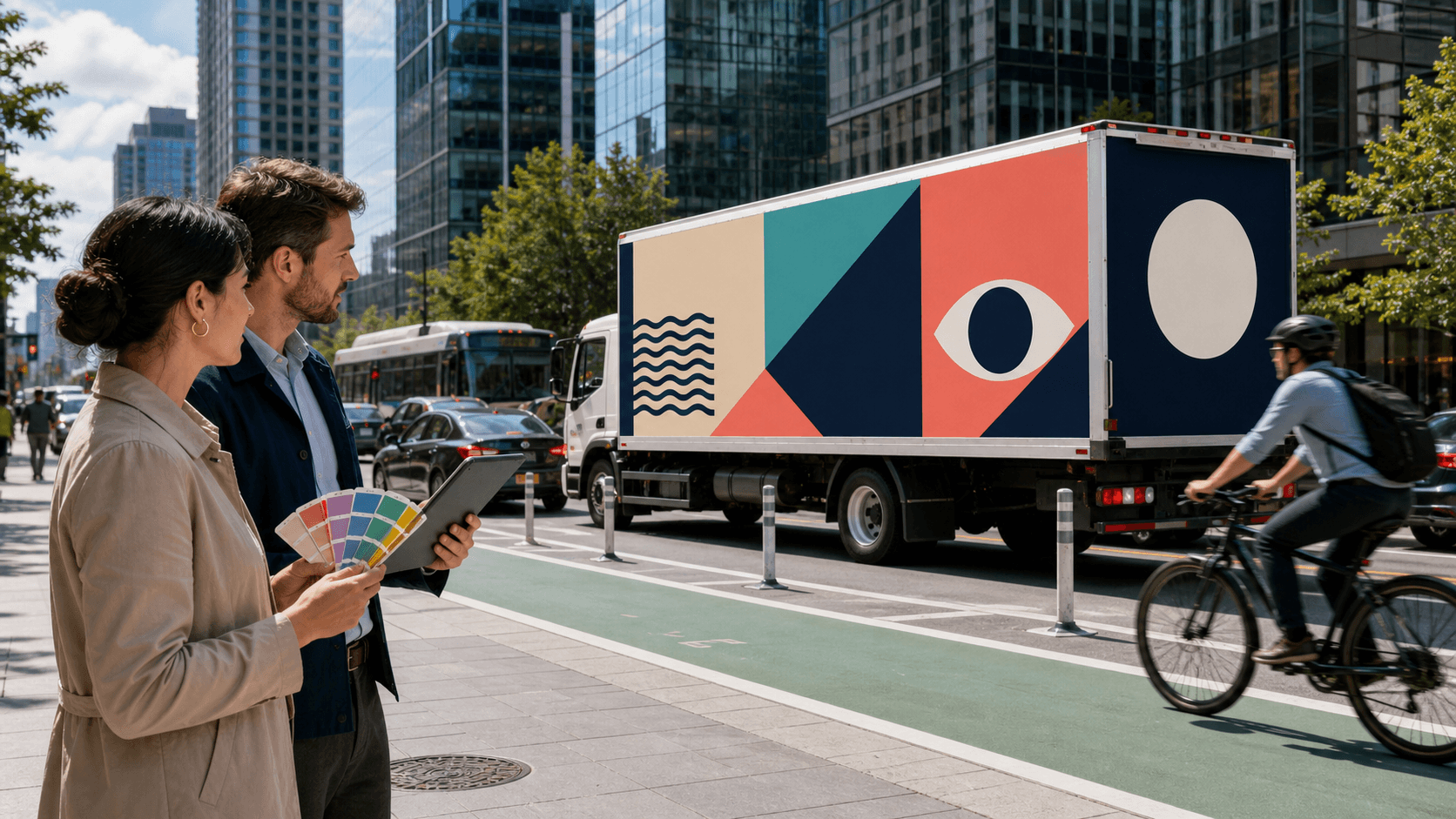
City streets do not behave like highways. Sightlines are shorter, views are blocked by buses and buildings, and people see your vehicles from unexpected angles and close range. Drivers and pedestrians are also managing crosswalks, bike lanes, rideshare pickups, and sudden stops.
Before design even starts, it helps to map where your fleet spends most of its time, such as:
- Downtown business districts
- Stadium and arena areas during events
- Warehouse and industrial corridors
- Last-mile delivery zones in dense neighborhoods
Each of these pockets has a different rhythm. In a downtown core, people may see your truck from a crosswalk or a second-floor window. Near stadiums or event spaces, vehicles spend more time paused in line, which means longer dwell time on your rear doors.
Urban visual competition is another big factor. Your wraps share the stage with:
- Digital billboards and transit ads
- Street and parking signs
- Construction barriers and fencing
- Storefront windows and banners
All of this naturally pushes design toward simplicity, strength, and high contrast. Time of day matters too. Morning and evening rush hours often mean stop-and-go traffic, which is ideal for short, clear messaging. After dark, street lighting and headlight glare change how colors read. In late spring and summer, bright sun, reflections off glass towers, and heat haze all make subtle tones harder to read.
When we walk this environment with you, we translate these real-world insights into specific wrap strategies, bolder color choices, precisely adjusted placement of key copy, and smarter use of reflectivity, solutions that perform beyond what simply looks good on a computer screen. Together, we balance creativity with practicality so your fleet stands out clearly and confidently.
Designing Fleet Truck Wraps That Cut Through City Clutter
In dense city traffic, people rarely have time to decode a complex message. They get a few seconds at most, sometimes less. Urban-ready fleet truck wraps need to work like a powerful headline, not a full brochure.
A strong city wrap usually focuses on:
- One clear idea, not a long list of services
- A large, easy-to-spot logo that reinforces your identity
- High-contrast color pairs, like light on dark or dark on light
Typography can make or break the design.
- Fonts with large, open shapes and a generous x-height
- Short, simple wording, keeping full sentences off the truck
- A clear order: brand name first, key service second, web or QR code third
Panel-specific design is also key. Different parts of the vehicle work best for different jobs:
- Rear doors: perfect for a short call-to-action at stoplights
- Side panels: ideal for big branding while the truck rolls slowly past sidewalks
- Cab doors: useful for close-up views at docks, in alleys, and near pedestrians
The power of simplicity cannot be overstated. Solid color blocking, clear icons, and recurring brand elements across every unit in the fleet create repeated impressions that link together in a viewer's mind. Over time, your trucks feel like one unified presence rather than a random mix of designs.
When optimized fleet truck wraps combine that visual clarity with durable, high-quality materials, your vehicles keep looking sharp even as they navigate tight corners, loading docks, and city grit. The right wrap not only holds up to daily use, it also redefines how strongly your brand shows up in every neighborhood you serve.
Safety, Compliance, and Visibility in Congested Streets
Good design and good safety go together. In busy urban settings, your trucks share tight space with small cars, bikes, buses, scooters, and significant foot traffic. Wrap layouts need to respect all the details that keep people safe and your fleet compliant.
That usually means:
- Keeping DOT numbers readable and separate from busy graphics
- Leaving door handles, steps, and latches clear
- Protecting warning labels and any required visibility zones
Reflective and high-visibility elements play a strong role at night or in heavy rain. Strategic strips of reflective vinyl, contour striping near the outer edges, and contrast around bumpers or liftgates can help your vehicles stand out without overwhelming the primary branding.
Placement is just as important as color choice. We avoid putting key copy across hinges, deep panel gaps, or surfaces that are often blocked by traffic or railings. Critical information should not live near steps or kick zones where it can get scuffed or covered in road grime.
Urban backdrops are mostly gray and neutral, such as asphalt, concrete, and glass. A design that looks great in a studio can disappear against those surfaces. Together, we balance brand colors with legibility, tuning tones so your logo, message, and safety elements stay bold against all that gray. Our experienced team also keeps an eye on local rules and fleet standards, helping wraps stay compliant, dependable, and highly visible over time.
From Concept to City Streets at Enterprise Scale
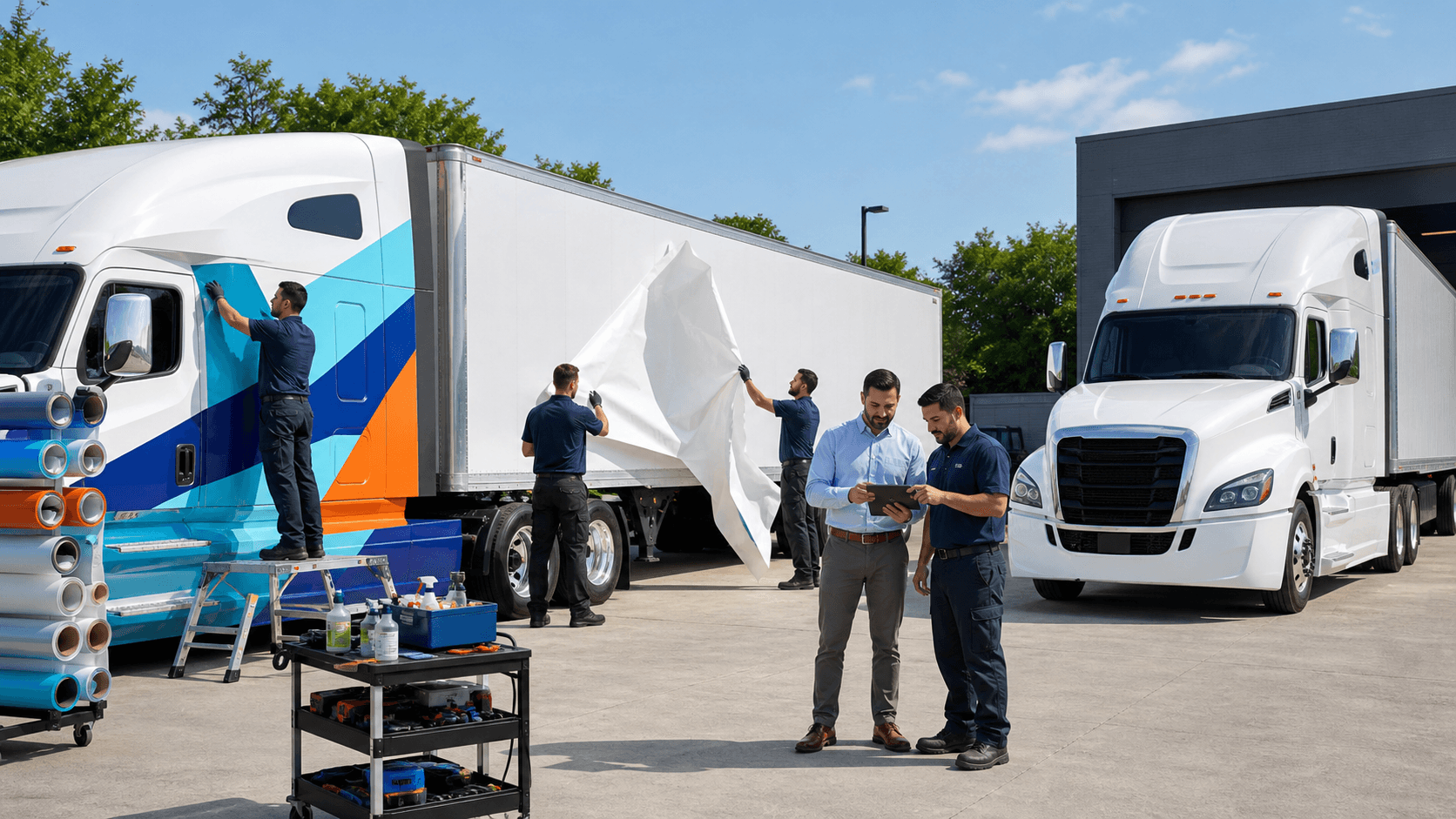
For enterprise fleets, one truck is never just one truck. You might be managing dozens or hundreds of units across several cities, each with its own routes, parking setups, and local conditions. That scale calls for a clear, repeatable process and tight logistics.
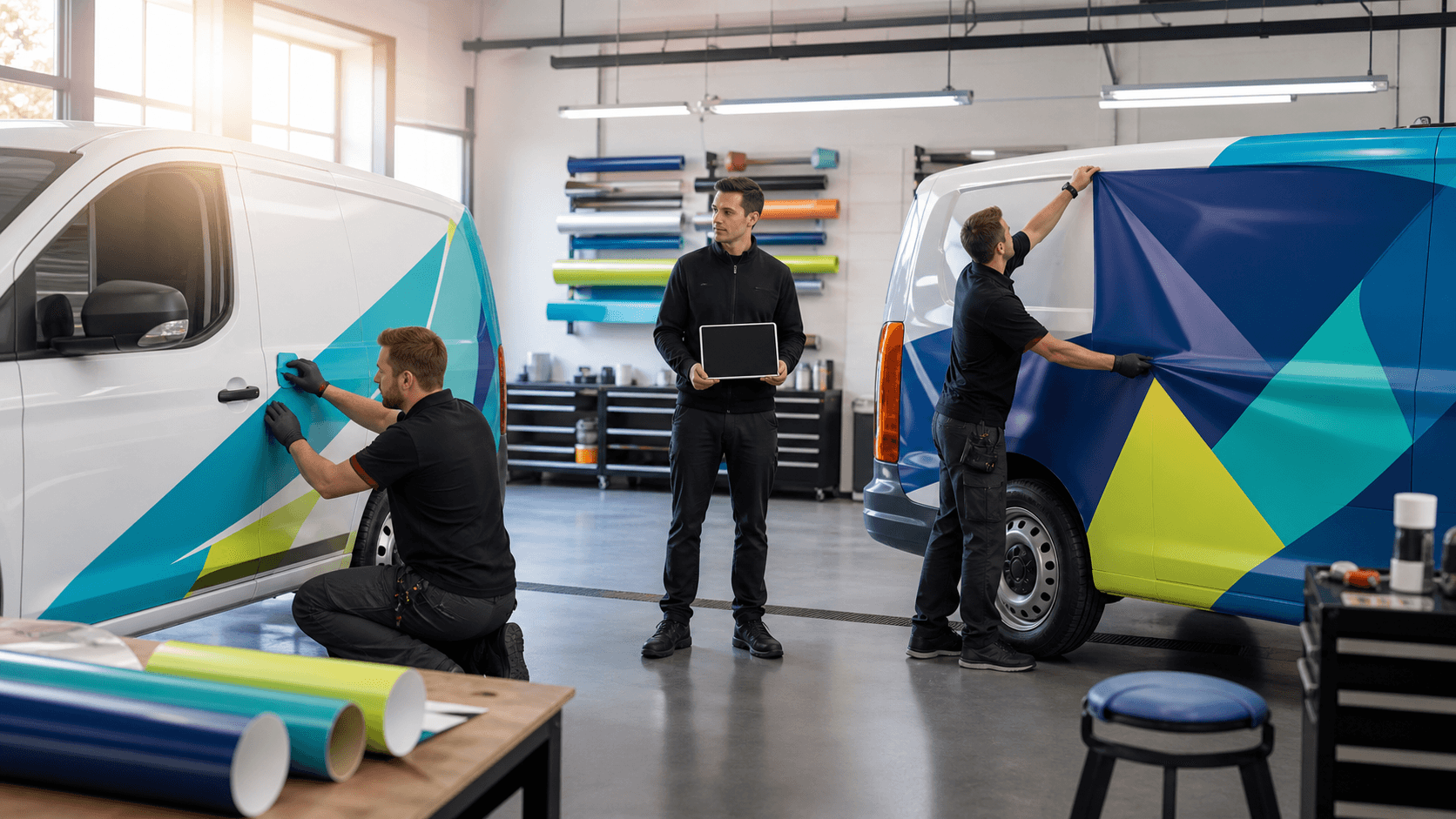
A typical wrap program moves through steps like:
- Discovery and route review to understand real-world exposure
- Concept and design mockups tied to actual vehicle types
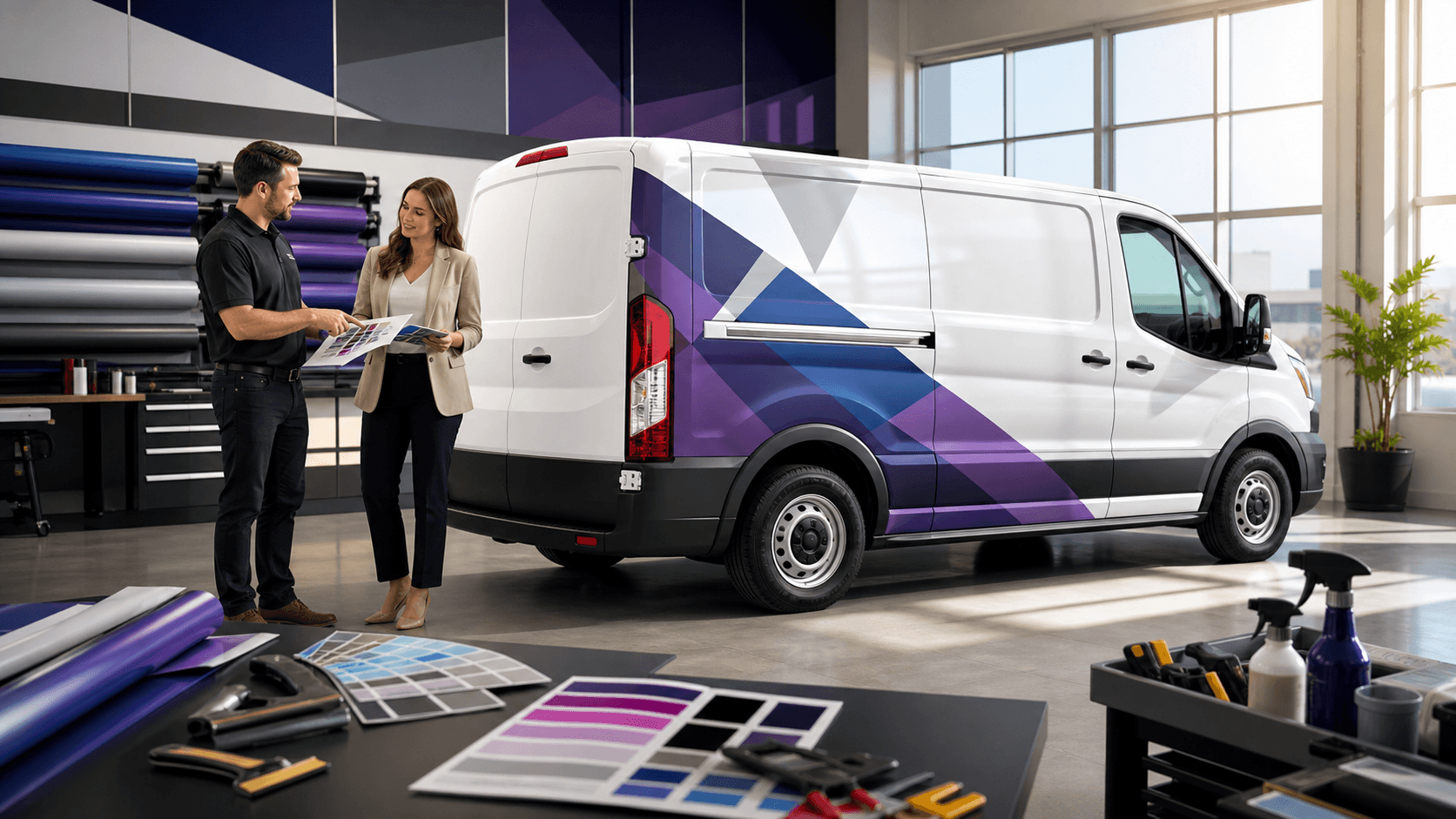
- Material and laminate selection that fits your use patterns
- Pre-production proofing and color checks for brand consistency
- Coordinated installation scheduling to reduce downtime
City fleets work hard, and the materials have to keep up. Dense urban use calls for films and laminates that can handle frequent washing, light abrasions from branches or tight bays, UV exposure in open lots, and the wear of regular loading and unloading. Options like anti-graffiti laminates and edge sealing can help wraps stand up to tagging or peeling and protect your investment.
A trusted national installer network helps make sure that quality stays even across markets, whether your trucks park near Lake Michigan wind, coastal salt air, or hot inland pavement. When fleet truck wraps are planned carefully and installed with precision, they not only project your message, they also protect vehicle surfaces and support long-term brand visibility and progress.
Logistics do not stop at installation. Together, we plan for:
- Seasonal refreshes tied to new campaigns or route changes
- Quick repairs after minor scrapes or panel replacements
- Simple cleaning routines so graphics stay bright despite dust and summer rain
This end-to-end support keeps your fleet looking unified, confident, and ready for what is next.
Drive Urban Impact with a Fleet Built to Be Seen
Every minute your vehicles spend in traffic can either slip by unused or work actively for your brand. With thoughtful design, smart material choices, and precise execution, urban congestion becomes a series of repeated, high-value impressions that keep your brand in front of the people you serve.
At American Graphics & Signs, we are grateful to collaborate with enterprise fleets and multi-site brands that want to make the most of every mile. Together, we read the city environment carefully, then build wraps around real routes and real conditions. In the process, we help turn everyday trucks into a confident, unified brand stage on every block, elevating visibility, strengthening recognition, and inspiring what your fleet can achieve next.
Get Started With Your Project Today
Ready to put your brand in front of more customers every mile you drive? At AGS SEO, we help you make the most of your marketing budget with high-impact fleet truck wraps that work for your business around the clock. Tell us about your goals and we will recommend smart, measurable strategies that fit your timeline and scale. Have questions or need a custom quote fast? Just contact us and our team will walk you through your best next steps.