Make Your Fleet Divestiture-Ready Before Deals Happen
Fleet divestitures move fast, especially when everyone is working to close the deals between Q4 and Q1. If your trucks are still on the road with the legacy brand after close, it can prolong legal work, create customer confusion, and weaken how both brands are perceived. How quickly and cleanly you can split, transfer, or de-brand vehicles can quietly influence deal value.
When we say "divestiture-ready" fleet graphics, we mean vehicles that can be updated on a clear, predictable schedule without sidelining a large portion of your fleet. Graphics are planned so you can strip, swap, or neutralize branding on demand. No uncertainty, no last-minute scramble.
When fleet graphics are managed with future change in mind, you protect brand equity, lower friction around trademark use and asset ownership, and support stronger resale outcomes. At American Graphics & Signs, we partner with multi-site and enterprise fleets across the country and see how much smoother deals go when graphics are part of the strategy, not an afterthought.
Thoughtful fleet graphics don't just solve for divestiture; they also enhance brand visibility and recognition every day. Well-designed, well-placed graphics ensure your brand presents with clarity and confidence in every market you serve.
Building a Fleet Graphics Strategy That Anticipates Change
Divestiture-ready fleets start long before any deal discussions. They start at the design table. Instead of locking every truck into a single, permanent look, you design graphics that can flex as your business evolves.
Smart, divestiture-aware design often includes:
- Modular logo placements that sit on defined zones or panels
- Limited full-body coverage and more targeted, high-impact areas
- Changeable elements like decals, panels, or overlays instead of graphics that behave like paint
You also want to align graphics specifications with how you treat the asset itself. Ask early on:
- Is this vehicle leased or owned?
- How long do we plan to keep it?
- Is it likely headed for resale, reallocation to another region, or a sub-brand?
Those answers shape how ambitious you should be with coverage and how straightforward removal should be. Standardizing films, colors, and base substrates across your fleet means that removal, repair, or rebranding can be managed with one playbook, no matter where the truck is located.
The most effective fleets integrate graphics into their corporate playbook. That means graphics standards live alongside brand guidelines, fleet lifecycle rules, and M&A checklists. When deal teams open the binder, the graphics plan is already there, aligning legal, brand, and operational needs.
Legal, Ownership, and Brand Control in Fleet Changes
When assets move, lawyers start asking detailed questions about who owns what. Graphics may feel like "just decals," but they can be treated as capitalized assets, part of the vehicle value, or separate intellectual property that must be removed before transfer.
You want clear answers to questions such as:
- Are the graphics included with the vehicle sale, or must they be removed first?
- Who funds removal or re-skinning, buyer or seller?
- How is this documented in schedules and closing documents?
Logos and trademarks add another layer. If your name is on the side of a truck you no longer control, that can conflict with non-compete language, licensing rules, or customer communication strategies. Deals often include specific timelines for when de-branding must be complete.
A compliance-ready transition plan usually covers:
- Service-level agreements (SLAs) for removal, re-skinning, or neutralization
- Photo documentation before and after work
- Chain-of-custody notes so risk and brand teams know when each unit is legally "clean"
A centralized graphics partner can sit between legal, fleet, brand, and operations teams and keep everyone aligned on timing, documentation, and standards, especially when trucks are distributed across multiple states. That kind of partnership helps protect your trademarks, your customer experience, and your long-term brand reputation.
Timelines, Seasonality, and Keeping Trucks Moving
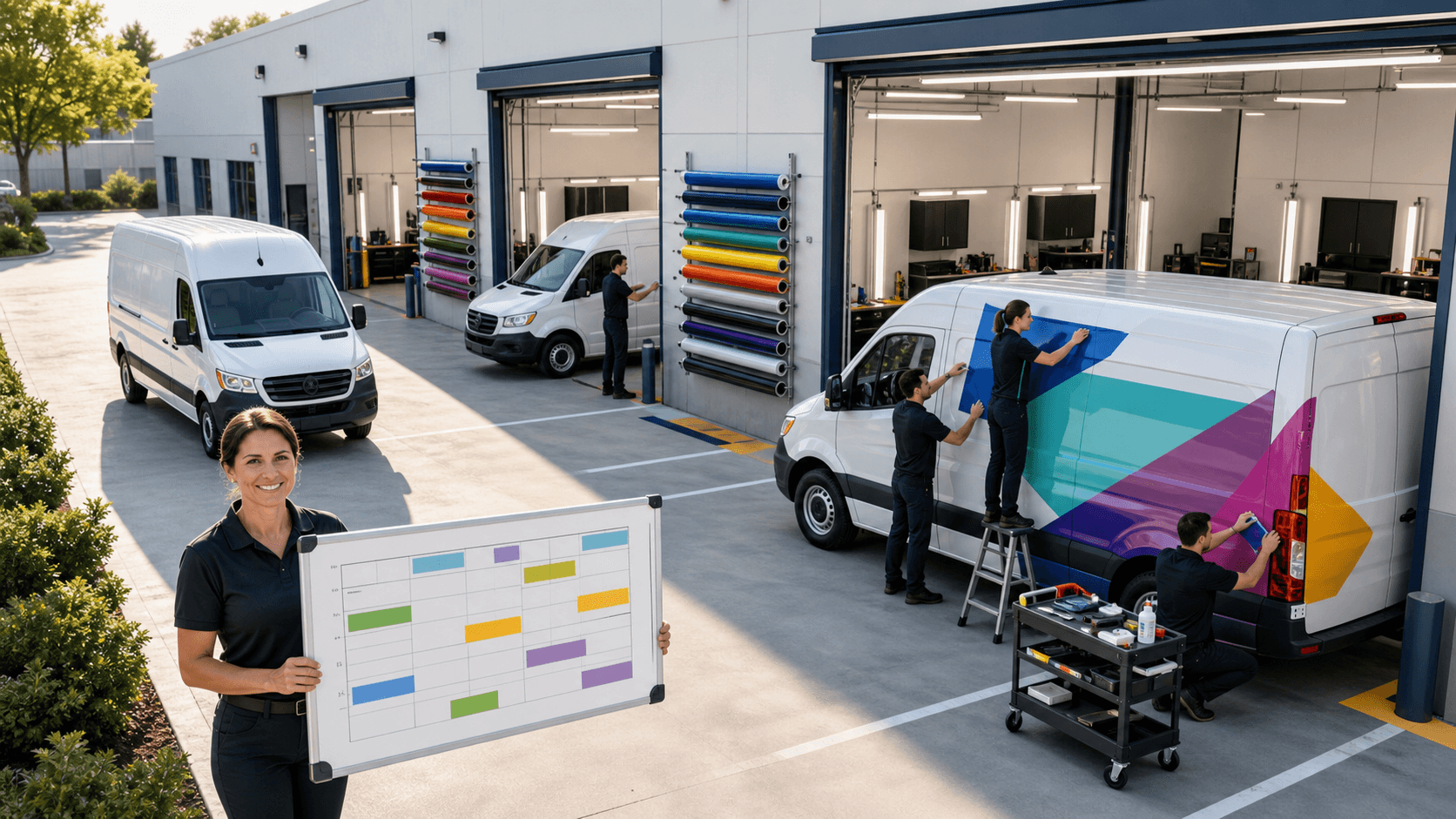
Divestiture timelines work backward from close. By the time you sign, it is already too late to start thinking about designs, approvals, production, and installer schedules. The more vehicles and the more buyers involved, the more precisely every step must be managed.
A realistic, well-orchestrated timeline usually includes:
- Final design and brand approvals
- Material planning and national production
- Shipping to local markets or depots
- Booked installation and removal windows by region
Seasonal timing matters. Late September into winter can bring budget crunches, short daylight, challenging weather in colder states, and peak demand for installers. Roads may be icy, docks busy, and it can be harder to park trucks for extended periods.
Phased deployment helps keep trucks in service while graphics catch up:
- Prioritize high-revenue routes and customer-facing regions first
- Use nights, weekends, or yard time for installs and removals
- Pair de-branding and new installs when possible so each truck is touched once
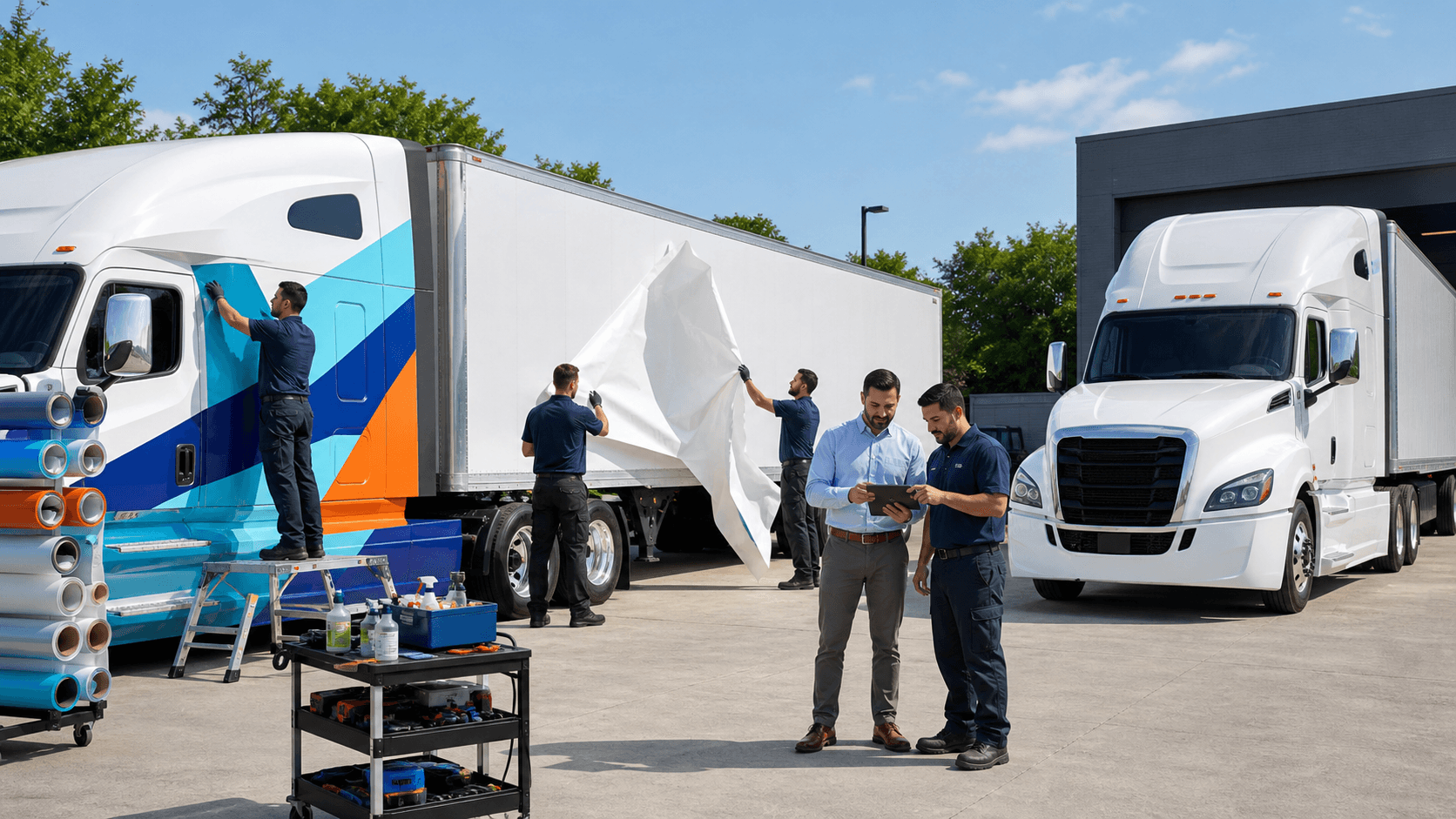
A national installer network helps keep these plans on track even when multiple brands, buyers, or territories are involved. Local crews understand local conditions, while central coordination maintains a unified schedule, consistent quality, and adherence to brand standards.
Protecting Resale Value with Smart Removal and Transfer Tactics
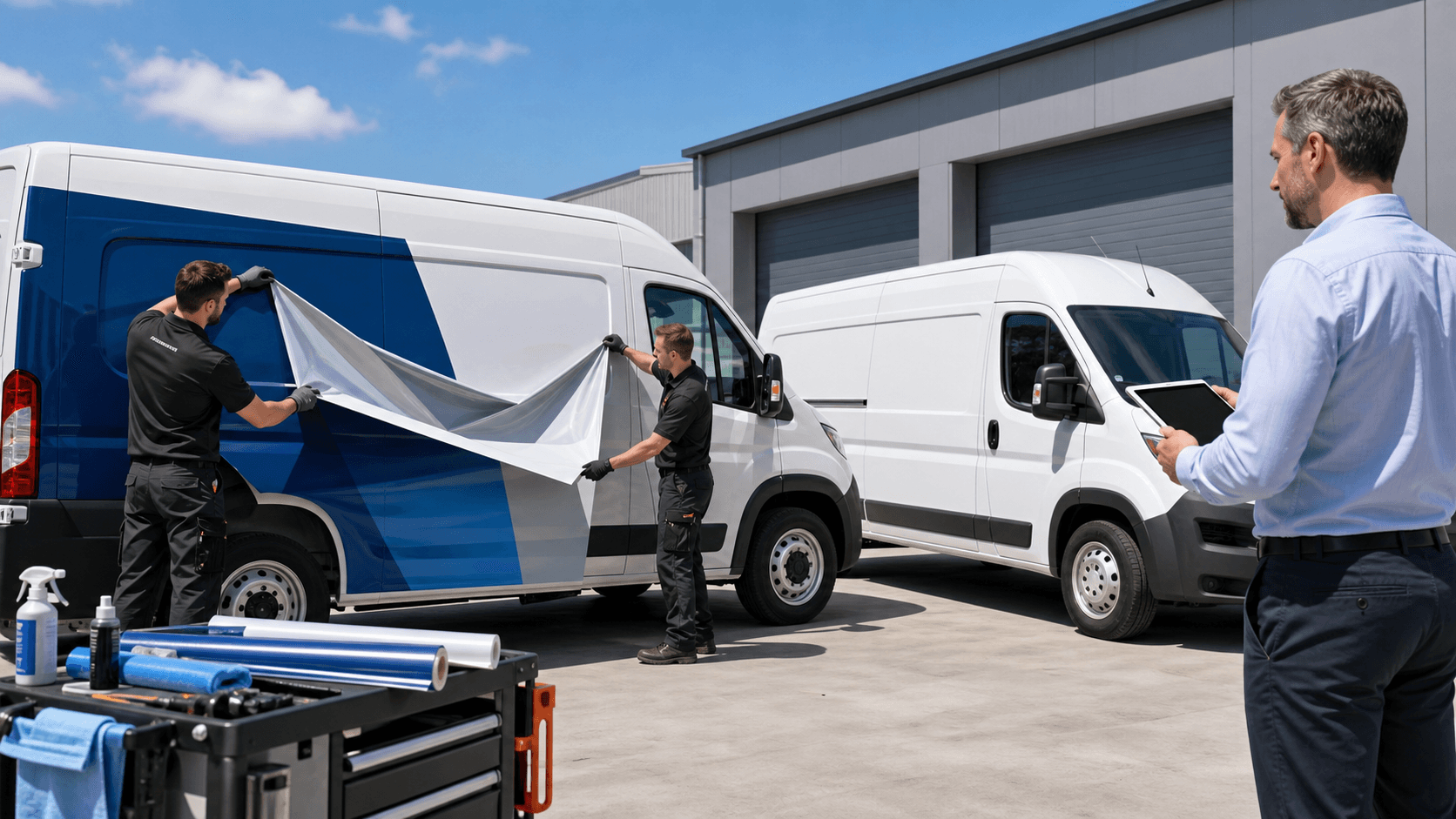
How you remove graphics can significantly affect what a used truck brings in. Hasty, unplanned removal can leave adhesive ghosting, paint damage, or mismatched panels that stand out on inspection. Careful, professional work is far more likely to protect finishes, support safety, and preserve long-term value.
When vehicles move to a new owner brand, you have options:
- Full rapid re-skinning into the new identity
- Partial cover-ups that remove or mask logos while leaving helpful information in place
- Temporary neutral graphics that keep trucks work-ready while final branding is finalized
Comprehensive documentation supports stronger resale conversations. That can include:
- Before and after photos from all sides
- A record of the materials removed or installed
- Notes from trained installers on the condition of paint and body panels
When fleet graphics are treated as part of the asset plan, divested vehicles arrive at the next owner looking clean, consistent, and market-ready, reflecting well on both the outgoing and incoming brands.
Rapid Decommissioning Kits and the Flexible Fleet Mindset
For many multi-state fleets, the greatest risk is not planning. That is where rapid decommissioning kits come in. These are pre-packed bundles set up for your specific fleet so local teams can safely de-brand or neutralize vehicles on a tight countdown while protecting finishes and brand integrity.
A typical kit might include:
- Approved removal tools and materials
- Neutral overlays or temporary branding pieces
- Step-by-step instructions that reflect your brand and legal requirements
- Pre-set logistics for returning unused items or used materials
Standardized kits give field depots a clear, precise process while still protecting paint, safety, and legal needs. For more complex transitions, they can be paired with remote support or onsite crews that handle challenging locations or specialty units.
At AGS SEO, part of American Graphics & Signs here in Michigan, we design these systems around vehicle type, region, and deal terms, then support them through our national network. For large, multi-state divestitures, that means synchronized de-branding, consistent work quality, and fewer last-minute surprises at closing.
Throughout, our focus is on combining creativity with practicality: graphics that look sharp on the road, elevate your brand presence, and still adapt smoothly when your strategy shifts.
The key mindset shift is seeing your fleet as a flexible brand asset, not a fixed one. When you audit your current graphics program for divestiture-readiness, review design modularity, documentation, vendor coverage, and removal plans. Build a cross-functional roadmap that incorporates M&A scenarios, seasonal realities, and clear decommissioning standards.
When those elements are in place, your fleet becomes a powerful, agile expression of your brand, ready to move with your strategy instead of holding it back when the next deal lands on your desk.
Get Started With Your Project Today
If you are ready to bring consistency and impact to your vehicles, our team at AGS SEO is here to help streamline your fleet graphics management. We work with you to understand your brand, your routes, and your goals so your fleet performs as a unified marketing asset. Tell us about your project and we will provide a clear plan, timeline, and next steps. To speak with our team directly, please contact us today.